
Introduction
India’s beaches offer much more than sand and sea. Travellers can enjoy calm island lagoons, active water-sports centres, cliffside sunsets, fishing communities, coastal food, pilgrimage towns and heritage sites beside the ocean.
With a coastline extending for thousands of kilometres and island territories in the Arabian Sea and Bay of Bengal, India offers beach experiences for families, couples, solo travellers, wellness seekers and adventure lovers. Some destinations are known for lively beach belts, while others suit travellers who prefer quiet mornings, homestays and slow coastal journeys. (Incredible India)
This article explores the most popular beach destinations in India, along with water activities, suitable travel durations, seasonal conditions, accommodation choices, transport planning, local food and estimated budgets. It also explains how HolidayLandmark can help travellers compare destinations, discover homestays, explore local guides and build a practical coastal itinerary.
Destination Overview
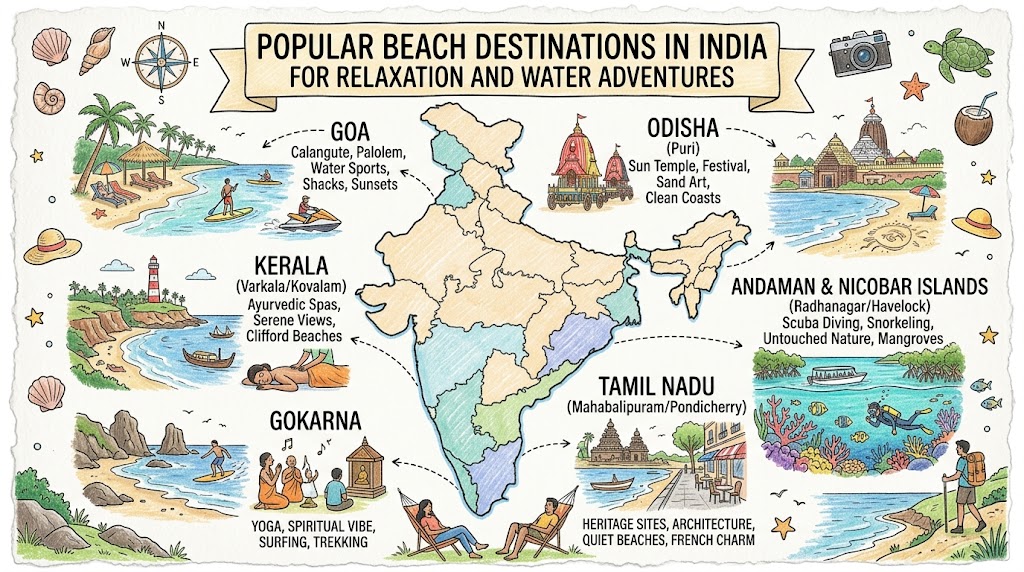
India’s coastal landscape stretches along the Arabian Sea in the west, the Bay of Bengal in the east and the Indian Ocean in the south. Goa, Kerala, Karnataka and Maharashtra offer palm-lined western beaches, sunsets and coastal food traditions. Odisha and Tamil Nadu combine beaches with temples, crafts and heritage sites.
The Andaman and Nicobar Islands offer tropical beaches, marine biodiversity, scuba diving, kayaking and glass-bottom boat experiences. Lakshadweep is known for coral islands, shallow lagoons, snorkelling and carefully regulated tourism that requires visitors to obtain an entry permit.
A suitable beach destination therefore depends on the traveller’s priorities. Goa and Kovalam provide strong tourism facilities, Gokarna and Varkala suit slower holidays, Puri and Rameswaram combine coastal and spiritual experiences, while Andaman and Lakshadweep require more advance planning.
Why Explore India’s Coastal Destinations
Different beaches for different travel styles
Indian beach destinations range from busy recreational shores to isolated coves. Families may prefer destinations with easier transport, accommodation and dining, while couples and solo travellers may look for quieter beaches, cliff walks or wellness stays.
Wide variety of water adventures
Depending on location, season and sea conditions, travellers can consider parasailing, surfing, scuba diving, snorkelling, kayaking, stand-up paddling, glass-bottom boat rides and short coastal cruises. Goa, Andaman, Lakshadweep, Tarkarli, Gokarna and parts of the Tamil Nadu coast are particularly associated with water-based activities.
Coastal culture and local communities
Many beach regions are connected with fishing, boat building, coconut cultivation, traditional crafts and seafood preparation. Respectful visits to fishing villages, craft communities and local markets can help travellers understand coastal life beyond resort areas.
Heritage and spiritual experiences
Puri, Rameswaram and Gokarna combine beach travel with major pilgrimage traditions. Mahabalipuram allows travellers to experience coastal scenery alongside historic monuments, while Puri can be combined with Konark and the artisan village of Raghurajpur.
Wellness and slow travel
Varkala and Kovalam are suitable for beach walks, yoga, meditation and wellness-focused stays. Marari in Kerala offers another quieter option for travellers who want fewer activities and more time near the sea.
Best Places to Visit Among Popular Beach Destinations in India
Goa
Goa is one of India’s most established beach destinations, with very different experiences across its coastline. Calangute and Baga suit travellers interested in activity, dining, shopping and water sports. Palolem, Agonda and Patnem in South Goa generally offer a slower atmosphere and are better suited to couples, families and relaxation-focused holidays.
Visitors can consider parasailing, water scooters, speed boating and other seasonal activities at selected beaches. These activities depend on weather, sea conditions and local permissions.
Suggested duration: Three to five days
Practical advice: Stay close to the beach area where most of your activities are planned, because travelling between the far north and south can take considerable time.
Suitable for: First-time beach travellers, groups, couples, families and water-sports enthusiasts
Swaraj Dweep and Other Andaman Islands
The Andaman Islands combine tropical beaches with coral-rich waters and marine activities. Swaraj Dweep, often associated with Radhanagar Beach, is a popular base for beach relaxation, diving and snorkelling. Travellers may also explore island boat trips, kayaking, glass-bottom boat rides and other registered water activities.
Inter-island movement depends on ferry availability and weather, so an extra buffer day is useful. Travellers should avoid planning tightly timed onward flights immediately after a distant island stay.
Suggested duration: Five to seven days
Practical advice: Reserve transport and accommodation early and confirm ferry arrangements before finalising the daily itinerary.
Suitable for: Couples, families with older children, divers, snorkellers and nature travellers
Kovalam, Kerala
Kovalam is close to Thiruvananthapuram and consists of adjoining crescent-shaped beaches. It has a wide selection of hotels, restaurants, wellness facilities and local transport, making it convenient for travellers who want beach time without travelling far from a major city.
Lighthouse Beach is the most recognised section, while quieter stretches may suit morning walks and relaxed evenings. Parasailing and coastal cruises may operate when conditions permit.
Suggested duration: Two to three days
Practical advice: Visit the beach early in the morning or later in the afternoon to avoid the strongest sun.
Suitable for: Families, couples, senior travellers, wellness seekers and short-break visitors
Varkala, Kerala
Varkala stands out because of its cliffside setting overlooking the Arabian Sea. Travellers can walk along the cliff, watch sunsets, visit yoga and meditation centres or spend time on the beach below.
The cliff area contains accommodation and dining options, but travellers should use recognised paths and steps when moving between the cliff and beach. Some sections may be affected by erosion or seasonal restrictions.
Suggested duration: Two to four days
Practical advice: Choose accommodation according to mobility needs because cliff access can involve stairs and uneven paths.
Suitable for: Solo travellers, couples, photographers, wellness travellers and slower holidays
Gokarna, Karnataka
Gokarna combines beaches, coastal walking routes and spiritual traditions. Its five best-known beaches are Gokarna Main Beach, Kudle, Om, Half Moon and Paradise. Om Beach offers easier access and seasonal activities, while Half Moon and Paradise generally require trekking or boat access.
The beach trek is one of Gokarna’s main experiences, but rocky and forested sections can become slippery during rain. It should be attempted in daylight with suitable footwear and enough water.
Suggested duration: Three to four days
Practical advice: Do not attempt remote cliff trails after dark, and confirm boat availability before relying on a sea transfer.
Suitable for: Backpackers, nature lovers, walkers, spiritual travellers and small groups
Tarkarli and Malvan, Maharashtra
Tarkarli is a coastal village in the Sindhudurg region and is known for beaches, backwaters and marine activities. Depending on seasonal conditions, visitors may find scuba diving, boating, jet skiing and parasailing through local activity providers.
Tarkarli can be combined with Malvan, Sindhudurg Fort viewpoints, coastal villages and local Malvani food. It offers a more community-based atmosphere than larger resort destinations.
Suggested duration: Two to four days
Practical advice: Ask diving providers about equipment, instructor credentials, medical restrictions, cancellation rules and actual dive conditions.
Suitable for: Adventure travellers, families, seafood lovers and weekend groups
Puri and Chandrabhaga, Odisha
Puri combines a busy beach with pilgrimage, markets and nearby cultural attractions. Visitors can include Jagannath Temple surroundings, Konark, Chandrabhaga Beach, Pipili and Raghurajpur in a wider coastal itinerary. Temple entry rules should always be verified before visiting.
Chandrabhaga offers a quieter coastal setting near Konark and is associated with activities such as boating and surfing when authorised operators and suitable conditions are available.
Suggested duration: Three to four days
Practical advice: Expect larger crowds during religious festivals, public holidays and major cultural events.
Suitable for: Families, pilgrims, cultural travellers, photographers and craft enthusiasts
Rameswaram, Tamil Nadu
Rameswaram brings together pilgrimage, fishing communities and calm coastal landscapes. Several beaches and waterfront areas surround the island, including Rameswaram Beach, Sangumal, Kunthukal, Ariyaman and Agni Theertham. (Tamil Nadu Tourism)
At selected areas, visitors may find stand-up paddling, kitesurfing and other recreational activities. The region is also suitable for scenic drives and visits to coastal villages, provided local access and environmental restrictions are respected.
Suggested duration: Two to three days
Practical advice: Dress respectfully around religious locations and distinguish between bathing areas, fishing zones and water-sports sections.
Suitable for: Pilgrims, families, cultural travellers and calm-water activity beginners
Mahabalipuram and the Chennai Coast
Mahabalipuram offers a useful combination of beach time and heritage exploration. Travellers can visit the coastal monuments and then continue towards quieter beaches or activity centres along the East Coast Road. Mahabalipuram is around a road journey from Chennai, making it suitable for short holidays.
Nearby coastal areas such as Covelong may offer surfing and recreational activities through trained operators. The sea can be strong at some east-coast beaches, so swimming should be limited to designated areas.
Suggested duration: Two days
Practical advice: Divide the day between monuments and the beach instead of exploring exposed outdoor sites during the hottest afternoon hours.
Suitable for: Heritage travellers, families, students, photographers and weekend visitors
Lakshadweep
Lakshadweep is known for coral islands, white-sand shores and shallow lagoons. Kayaking, canoeing, snorkelling, glass-bottom boat rides and scuba diving are offered on selected islands through authorised programmes. Kadmat, Kavaratti and other permitted tourist islands provide different combinations of marine activities and quiet stays.
All tourists require permission to visit Lakshadweep, and access is commonly organised through Kochi. Accommodation and transport capacity are limited, so visitors must confirm current packages, permits and island availability before paying for connecting travel.
Suggested duration: Four to seven days
Practical advice: Do not book non-refundable connecting arrangements until the permit, island stay and transport have been confirmed.
Suitable for: Snorkellers, divers, couples, nature travellers and carefully planned family holidays
Things to Do
Try beginner-friendly water activities
Kayaking, pedal boating, glass-bottom boat rides and supervised stand-up paddling can be suitable introductions for travellers who are uncomfortable with deep water. Participants should still wear life jackets and follow the operator’s instructions.
Learn scuba diving or snorkelling
Andaman, Lakshadweep, Tarkarli and parts of Gokarna are associated with diving and snorkelling. Beginners should select recognised operators that provide equipment checks, trained instructors and clear medical guidance.
Take a coastal walk
Beach walks in Varkala, Gokarna, Goa and Kerala provide opportunities for photography and sunset views. Longer walks should be planned around daylight, tides, heat and safe access routes.
Explore coastal heritage
Combine beach time with temples, forts, churches, museums, monuments and artisan communities. Puri can be combined with Konark and Raghurajpur, while Mahabalipuram offers one of the easiest beach-and-heritage combinations.
Experience local food
Try regional seafood, vegetarian coastal meals, coconut-based preparations, rice dishes and seasonal produce. Ask about ingredients when managing allergies or dietary restrictions.
Watch local fishing activity respectfully
Fishing harbours and village shores can be interesting, but they are active workplaces rather than staged attractions. Keep away from nets, boats and equipment, and request permission before photographing people.
Suggested Seven-Day Goa and Gokarna Travel Itinerary
This itinerary keeps travel within the western coastal region rather than attempting to combine distant mainland and island destinations.
Day One: North Goa Arrival
Check in near your chosen beach and keep the first day relaxed. Spend the late afternoon at Calangute, Candolim or another nearby shore. Avoid scheduling a water activity immediately after a long journey.
Day Two: North Goa Activities
Choose one authorised water activity in the morning when conditions are suitable. Spend the rest of the day visiting a local market, enjoying Goan food or relaxing near the beach.
Day Three: South Goa
Move to Palolem, Agonda or Patnem. Plan a quieter beach afternoon and consider a short local boat experience only after confirming weather and safety arrangements. Palolem and Agonda provide a different atmosphere from the busier North Goa beach belt.
Day Four: Transfer to Gokarna
Travel by road from South Goa towards Gokarna. The Goa–Gokarna coastal route is manageable within the day, but road conditions and traffic can affect journey time. Check in and spend the evening at Kudle Beach. (Karnataka Tourism)
Day Five: Om Beach and Coastal Views
Visit Om Beach in the morning. Choose between light water activities, a short coastal walk or a relaxed beach day. Confirm sea conditions before swimming or taking a boat.
Day Six: Gokarna Beach Trek
Walk a suitable section connecting Kudle, Om and other accessible beaches. Travellers who are not comfortable with steep or rocky paths can return by road or arrange a verified boat transfer where available.
Day Seven: Departure
Depart through Gokarna Road railway station or travel towards the airport best suited to the onward journey. Gokarna can be approached through road, rail and airports in Goa or Mangaluru, but travellers should compare the total transfer time before booking.
Best Time to Visit
For many mainland beach destinations, October to February provides relatively comfortable weather and a wider choice of outdoor activities. March to May can be hot and humid, while monsoon conditions may restrict swimming, boating, trekking and other water activities.
Lakshadweep’s official tourism guidance identifies September to May as the main visiting period, while Gokarna’s coastal trekking conditions are generally more suitable from October to March. Goa’s seasonal water activities also tend to operate mainly outside the peak monsoon months.
| Season | Typical Conditions | Suitable Experiences | Travel Advice |
|---|---|---|---|
| October to February | Generally comfortable across many coastal regions | Beach walks, sightseeing, water sports, family holidays | Reserve early during holidays and festival periods |
| March to May | Hotter, brighter and more humid | Early-morning activities, swimming in designated areas, island trips | Carry sun protection and avoid exposed afternoons |
| June to September | Rain, stronger seas and changing activity availability | Wellness stays, food experiences and selected sightseeing | Expect cancellations and avoid unsafe sea conditions |
| Festival and holiday periods | Higher crowds and demand | Cultural events, pilgrimage and local celebrations | Confirm accommodation, traffic arrangements and access rules |
Conditions vary significantly between the east coast, west coast and island territories. Check local weather alerts and operator updates shortly before travelling.
How to Reach and Travel Locally
| Destination Region | Main Gateway | Local Travel Considerations |
|---|---|---|
| Goa | Dabolim Airport, Manohar International Airport, rail and road links | Taxis, buses and rental vehicles connect beach belts; north-to-south travel requires time |
| Kovalam and Varkala | Thiruvananthapuram airport and railway connections | Taxis, buses and local vehicles are available; check cliff access in Varkala |
| Gokarna | Gokarna Road railway station, Goa or Mangaluru airports | Autos, taxis and buses connect the town and main road-accessible beaches |
| Puri | Puri Junction and Bhubaneswar Airport | Local taxis and buses connect Puri, Konark and nearby cultural attractions |
| Andaman | Flights or ships to Sri Vijaya Puram followed by ferries | Ferry schedules, weather and island transfers require advance coordination |
| Lakshadweep | Kochi gateway and air access through Agatti for selected routes | Permits, authorised packages and limited island transport must be confirmed early |
| Tamil Nadu Coast | Chennai for Mahabalipuram; rail and road links for Rameswaram | Road transfers are common; keep additional time for coastal and island sections |
| Tarkarli | Southern Konkan rail and road gateways | Local taxis are useful because attractions and activity points are spread across the region |
Exact schedules, routes and transfer availability can change. Travellers should verify current details with official transport providers before departure.
Accommodation and Homestays
Beach destinations in India offer everything from hostels and family-run guesthouses to boutique hotels, beach cottages and full-service resorts.
Budget travellers
Hostels, simple guesthouses and rooms slightly away from the main beachfront usually offer better value. Check whether the room includes hot water, air conditioning, secure storage and late-arrival support.
Families
Families may benefit from accommodation with larger rooms, meal services, reliable road access and a safe walking route to the beach. A property directly beside the sea may not always be the most convenient choice for children or senior travellers.
Couples
Varkala, South Goa, Marari, Gokarna, Andaman and Lakshadweep offer quieter environments, but availability and prices vary greatly by season.
Solo travellers
Choose accommodation with recent reviews, a staffed reception and easy access to transport. Remote beach huts may feel peaceful but can become difficult to reach after dark.
Homestay experiences
A coastal homestay can introduce travellers to regional food, fishing traditions, village customs and everyday community life. HolidayLandmark can help visitors discover homestays and compare them with other accommodation types while planning local experiences.
Before booking, confirm the exact location, road access, meal arrangement, cancellation conditions and distance from the safe swimming or activity area.
Local Tour Guides
A knowledgeable local guide can help travellers understand coastal history, religious traditions, village occupations, craft practices and environmental concerns. Guides can also make it easier to combine several attractions without wasting time on unsuitable routes.
A guide may be especially useful for:
- Heritage visits in Puri, Konark and Mahabalipuram
- Temple and cultural travel in Gokarna and Rameswaram
- Nature and marine experiences in Andaman and Lakshadweep
- Village and craft visits
- Coastal walking routes
- Food and market experiences
Before confirming a guide, ask for identification, relevant experience, language ability, charges, working hours and a written explanation of included services. Water activities should be managed by trained activity instructors rather than a general sightseeing guide.
Village Tourism and Local Experiences
Coastal tourism becomes more meaningful when visitors learn how local communities live and work. Fishing villages, craft communities, coconut-growing areas and small coastal markets can add depth to a beach itinerary.
Near Puri, Raghurajpur is recognised for traditional art and can be included with Konark and the coast. Karnataka’s coastal region also includes fishing settlements where daily life remains closely connected with the sea.
Travellers should not enter homes, photograph residents or handle fishing equipment without permission. Buying directly from local artisans, eating at family-run establishments and using community-based guides can help ensure that tourism income reaches local residents.
HolidayLandmark can support this kind of planning by helping travellers discover village tourism opportunities and authentic community experiences alongside major beach attractions.
Pilgrimage and Spiritual Travel
Puri, Rameswaram and Gokarna are important examples of destinations where beach travel overlaps with pilgrimage.
Puri attracts religious visitors and can become extremely busy during major festivals. Gokarna includes the Mahabaleshwar Temple and other sacred locations, while Rameswaram has several religious bathing areas and temple-related travel traditions.
Visitors should:
- Wear respectful clothing
- Check temple entry conditions in advance
- Follow restrictions on photography and electronic items
- Avoid blocking rituals or bathing areas
- Use designated footwear and storage facilities
- Plan additional time for senior travellers
- Avoid treating sacred shorelines as ordinary recreational beaches
Religious access rules can change, particularly during festivals and security arrangements, so local confirmation is important.
Adventure Activities
| Destination | Possible Activities | Suitable Experience Level | Important Precaution |
|---|---|---|---|
| Goa | Parasailing, water scooters, surfing and seasonal boating | Beginner to intermediate | Use registered operators and check sea conditions |
| Andaman | Scuba diving, kayaking, snorkelling and glass-bottom boats | Beginner to advanced | Keep buffer time for ferries and weather changes |
| Lakshadweep | Scuba diving, snorkelling, kayaking, sailing and canoeing | Beginner to advanced | Confirm permits, medical requirements and authorised providers |
| Gokarna | Surfing, parasailing, boating and coastal trekking | Beginner to intermediate | Avoid cliff trails after dark or during heavy rain |
| Tarkarli | Scuba diving, parasailing, jet skiing and boating | Beginner to intermediate | Inspect safety equipment and instructor credentials |
| Chandrabhaga | Surfing, boating and other seasonal water activities | Beginner to intermediate | Activities depend on operators and sea conditions |
| Rameswaram Coast | Kitesurfing, stand-up paddling and recreation at selected beaches | Beginner with instruction to advanced | Use designated activity zones |
People with heart, breathing, ear or mobility concerns should discuss suitability with an appropriate medical professional before participating in diving or strenuous water sports.
Local Food and Shopping
Coastal travel offers opportunities to try seafood, rice dishes, coconut-based curries, regional breads, vegetarian temple food and local sweets.
In Goa, travellers may find fish curry rice, xacuti, cafreal, rechaido preparations and traditional sweets. Kerala’s coastal meals often use coconut, rice and seafood, while Tamil Nadu’s coastal cuisine reflects several regional cooking traditions.
Puri is associated with temple food traditions and sweets such as khaja. Maharashtra’s Konkan coast is known for Malvani-style preparations, seafood and kokum-based drinks.
Travellers with dietary restrictions should ask whether dishes contain shellfish, fish stock, coconut, peanuts or strong spices. Vegetarian travellers should confirm whether separate preparation is available.
For shopping, consider locally made textiles, baskets, paintings, shells from legal and responsible sources, spices and food products. Avoid buying coral, protected marine items or products whose origin cannot be explained. Purchasing directly from craftspeople helps support local livelihoods.
Estimated Travel Budget
The following figures are flexible editorial planning estimates for one person per day at mainland beach destinations. They exclude long-distance trains, flights, island ferries and major shopping.
| Expense Category | Budget Travel | Mid-Range Travel | Comfortable Travel |
|---|---|---|---|
| Accommodation | ₹800–₹1,800 | ₹2,500–₹5,500 | ₹6,500–₹15,000+ |
| Food | ₹500–₹1,000 | ₹1,200–₹2,500 | ₹3,000–₹6,000 |
| Local transport | ₹300–₹800 | ₹1,000–₹2,500 | ₹3,000–₹6,000 |
| Activities | ₹500–₹2,000 | ₹2,000–₹6,000 | ₹6,000–₹15,000+ |
A mainland budget trip may therefore begin around ₹2,100 per person per day, while a comfortable trip with private transport and activities can cost much more.
Andaman and Lakshadweep usually require a separate budget because flights, ferries, permits, island accommodation and marine activities can significantly increase total costs. Prices also change according to season, holidays, room availability, group size and personal choices.
Safety and Responsible Travel
Follow beach warning systems
Do not enter the water when warning flags, lifeguards or local authorities advise against it. In Goa, official guidance advises visitors not to swim after sunset and to supervise children closely.
Choose trained activity operators
Ask about licences, instructor training, life jackets, emergency procedures, equipment maintenance and insurance. A low price should not be the main reason for choosing a diving or boating provider.
Protect marine environments
Do not touch coral, collect marine life, leave plastic waste or feed fish. Use refillable bottles where facilities allow and avoid carrying disposable items onto remote islands.
Respect fishing communities
Keep away from working boats, drying nets and auction areas unless invited. Fishing families depend on access to the shore, so travellers should not block working spaces for photographs.
Prepare for heat and weather
Carry water, sun protection, light clothing and suitable footwear. Weather and sea conditions can change quickly, especially during monsoon periods.
Protect personal belongings
Use secure storage for phones, wallets and travel documents. Avoid leaving bags unattended while swimming.
Request photography permission
Ask before photographing residents, religious ceremonies, fishermen or private village spaces. Some temples, military areas and marine facilities restrict photography.
Practical Travel Tips
- Select one coastal region for a short holiday instead of combining distant states.
- Keep a flexible day for island ferries and weather-dependent activities.
- Carry quick-drying clothing, sandals and walking shoes.
- Store important documents in waterproof protection.
- Avoid heavy meals immediately before boating or diving.
- Confirm whether accommodation has reliable road access after dark.
- Keep cash available in smaller coastal communities, but use secure payment methods.
- Check swimming zones separately from water-sports and fishing areas.
- Reserve popular accommodation early during December, long weekends and festivals.
- Ask about cancellation policies for weather-dependent activities.
How HolidayLandmark Supports Better Travel Planning
HolidayLandmark can help travellers move from general beach inspiration to a practical travel plan.
Travellers can use the platform to:
- Discover popular and lesser-known beach destinations
- Compare relaxation, culture and adventure experiences
- Explore suitable India travel itineraries
- Understand the best time to visit different coastal regions
- Discover local tour guides
- Find homestays and community-based accommodation
- Explore village tourism and coastal culture
- Plan pilgrimage visits in Puri, Gokarna or Rameswaram
- Discover adventure activities in India
- Research nearby attractions and transport options
- Connect with relevant local travel providers
Rather than treating every beach as the same, HolidayLandmark can help travellers choose a destination that suits their time, budget, interests and preferred level of activity.
Frequently Asked Questions
1. Which is the best season for visiting Indian beach destinations?
October to February is generally comfortable for many mainland beach destinations. However, the ideal period differs for island territories and individual activities, so local weather and operator updates should be checked before departure.
2. How many days are enough for a beach holiday in India?
Three to four days are usually suitable for a single mainland destination such as Goa, Gokarna, Kovalam or Puri. Andaman and Lakshadweep generally require five to seven days because of flights, ferries and island transfers.
3. Which beach destinations are suitable for families with children?
Goa, Kovalam, Puri and selected Andaman beaches provide relatively developed tourism facilities. Parents should still choose designated swimming areas, supervise children continuously and avoid relying on the visual calmness of the sea as proof of safety.
4. Where can beginners try water sports in India?
Goa, Kovalam, Tarkarli, Andaman, Lakshadweep, Gokarna and selected Tamil Nadu beaches offer beginner activities through local providers. Beginners should start with trained instructors and confirm that safety equipment is included.
5. Are beach homestays better than hotels?
Homestays can offer closer contact with local food and community life, while hotels may provide more standardised facilities. The better option depends on privacy, accessibility, meal preferences and the traveller’s comfort with a family-run environment.
6. Is a local guide necessary for a beach trip?
A guide is not always required for relaxing on a well-developed beach. However, guides can be valuable for pilgrimage routes, craft villages, heritage sites, food experiences and lesser-known coastal locations.
7. How much should a traveller budget for a mainland beach holiday?
A budget traveller may plan approximately ₹2,100–₹5,000 per person per day, excluding long-distance transport. Island destinations, private transfers, diving and premium beachfront accommodation can raise the total considerably.
8. What food precautions should beach travellers follow?
Choose busy and hygienic food establishments, drink safe water and ask how seafood has been stored. People with shellfish allergies should clearly explain their restrictions because utensils, sauces or stocks may contain seafood.
9. Is swimming allowed at every Indian beach?
No. Strong currents, rocks, tides, weather alerts, fishing activity and local restrictions can make some sections unsuitable. Swim only in designated areas and follow lifeguards, warning flags and official instructions.
10. Which nearby attractions can be combined with a beach holiday?
Goa can be combined with heritage areas and markets, Puri with Konark and Raghurajpur, Gokarna with temples and coastal treks, and Mahabalipuram with historic monuments. Selecting nearby attractions prevents excessive travel and leaves enough time for relaxation.
Conclusion
The popular beach destinations in India offer an unusually wide range of experiences. Travellers can choose the lively beach belts of Goa, the cliffside atmosphere of Varkala, Gokarna’s coastal walks, Tarkarli’s marine activities, Puri’s spiritual and cultural setting or the tropical waters of Andaman and Lakshadweep. Families, couples, solo travellers, pilgrims and adventure seekers can all find coastal destinations suited to their interests.
A satisfying beach holiday depends on realistic planning. Sea conditions, seasonal rain, local transport, accommodation access and activity availability can affect the experience. Travellers should avoid placing too many distant places in one itinerary and leave enough time for weather-related changes, especially when ferries and island transfers are involved.
Local guides, homestays and community experiences can make a coastal trip more personal. They allow visitors to understand regional food, fishing traditions, crafts, religious customs and village life rather than seeing the coast only from a resort. Respectful behaviour, responsible waste disposal and support for local businesses also help protect fragile beach and marine environments.
HolidayLandmark can support this planning by helping travellers discover destinations, compare experiences, explore practical itineraries and find local guides, homestays, pilgrimage routes and adventure activities. With thoughtful research and flexibility, an Indian beach journey can balance quiet time by the sea with culture, community experiences and carefully chosen water adventures.

