
Introduction
Becoming a pilot is a dream career choice for many students who are passionate about aviation, aircraft, and exploring the world from the skies. However, turning this dream into a professional aviation career requires proper planning, technical knowledge, practical training, and understanding of aviation regulations.
In India, pilot training follows standards established by the Directorate General of Civil Aviation (DGCA), which is responsible for regulating civil aviation activities and ensuring safety standards. Students who want to become professional pilots need to complete approved training programs, clear required examinations, meet medical standards, and gain practical flying experience.
For beginners, understanding the complete DGCA pilot training journey helps in making better career decisions. From selecting the right flight school and completing ground classes to gaining flight hours and obtaining a commercial pilot license, every step plays an important role in building a successful aviation career.
This DGCA Pilot Training Guide for Beginners explains the complete process, eligibility requirements, training stages, skills needed, challenges, preparation tips, and career opportunities for aspiring pilots in India.
What is DGCA Pilot Training?
DGCA pilot training refers to the structured aviation training process followed by aspiring pilots under the guidelines of the Directorate General of Civil Aviation. It prepares students with the theoretical knowledge, flying skills, and professional abilities required to operate aircraft safely.
Pilot training includes two major learning areas:
Ground Training
Ground classes focus on aviation theory and help students understand important concepts such as:
- Aircraft systems.
- Aviation regulations.
- Navigation.
- Weather conditions.
- Flight planning.
- Communication procedures.
Flight Training
Flight training provides practical experience through aircraft operations under the guidance of certified flight instructors.
Students learn:
- Aircraft handling.
- Takeoff and landing procedures.
- Navigation flights.
- Emergency operations.
- Professional cockpit practices.
DGCA-approved training ensures that students follow standardized procedures required for professional aviation careers.
Types of Pilot Licenses Under DGCA
Students can pursue different pilot licenses depending on their aviation goals.
Student Pilot License
A Student Pilot License is the starting point for individuals beginning their flying journey.
It allows students to:
- Start flight training.
- Learn basic aircraft operations.
- Practice flying under instructor supervision.
This license helps beginners enter the aviation training system.
Private Pilot License
A Private Pilot License allows individuals to operate aircraft for personal flying purposes.
It focuses on:
- Basic flying skills.
- Aircraft handling.
- Aviation knowledge.
- Flight experience.
A PPL is generally suitable for aviation enthusiasts who want to fly privately rather than pursue airline careers.
Commercial Pilot License
A Commercial Pilot License is the primary goal for students who want to become professional pilots.
A CPL allows pilots to pursue careers such as:
- Airline pilots.
- Charter pilots.
- Corporate aviation pilots.
- Flight instructors.
Commercial pilot training requires extensive theoretical learning, practical flying experience, and successful completion of required examinations.
Eligibility Requirements for DGCA Pilot Training
Before starting pilot training, students must meet certain eligibility criteria.
Educational Qualification
A strong academic background is important for aviation training.
Generally, students should have knowledge of:
- Mathematics.
- Physics.
- Science concepts.
These subjects help students understand:
- Aircraft performance.
- Flight calculations.
- Navigation principles.
- Aviation technology.
Students who build strong foundations in science and mathematics can adapt more easily to pilot training.
Age Requirements
Age requirements depend on the type of pilot license being pursued.
Beginners should understand the age criteria before planning their training pathway because aviation training involves multiple stages, including examinations and flight experience requirements.
Medical Requirements
Physical fitness is an essential part of becoming a pilot.
Aviation medical assessments evaluate areas such as:
- Vision.
- Hearing.
- General health condition.
- Physical fitness.
- Overall medical suitability.
Completing medical requirements early can help students avoid delays during training.
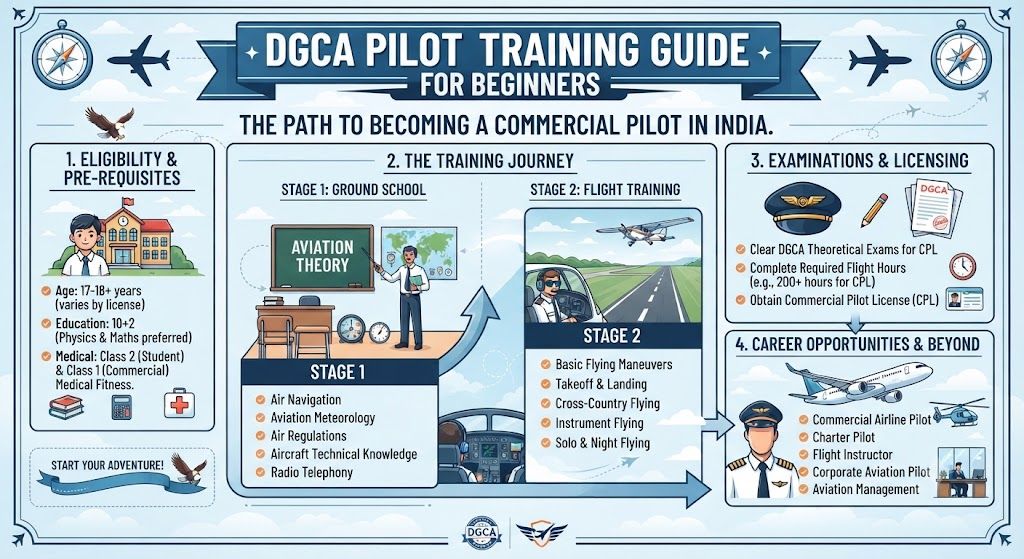
DGCA Pilot Training Process Explained
The journey from beginner to professional pilot involves multiple stages.
Step 1: Choose a DGCA Approved Flight School
Selecting the right flight school is one of the most important decisions for beginners.
Students should consider:
- Training quality.
- Instructor experience.
- Aircraft availability.
- Safety practices.
- Training facilities.
- Student support.
A suitable training environment helps students develop confidence and practical flying skills.
Step 2: Complete Ground School Training
Before flying an aircraft, students need strong theoretical knowledge.
Ground training covers subjects including:
Air Navigation
Students learn:
- Flight routes.
- Aircraft positioning.
- Navigation techniques.
- Planning safe journeys.
Aviation Meteorology
Students understand:
- Weather patterns.
- Wind conditions.
- Weather-related flight decisions.
Air Regulations
Students learn:
- Aviation rules.
- Pilot responsibilities.
- Safety procedures.
Aircraft Technical Knowledge
Students study:
- Aircraft components.
- Engine systems.
- Flight instruments.
Radio Communication
Students learn professional communication methods used between pilots and air traffic controllers.
Step 3: Clear DGCA Examinations
Theoretical examinations test a student’s understanding of aviation concepts.
Successful preparation requires:
- Regular study.
- Understanding concepts.
- Practice with aviation topics.
- Consistent revision.
Strong theoretical knowledge helps pilots make safe decisions during actual flights.
Step 4: Complete Flight Training Hours
Practical flying experience is a major part of pilot training.
Students practice:
- Aircraft controls.
- Takeoff procedures.
- Landing techniques.
- Navigation flights.
- Solo flying.
- Emergency handling.
Flight instructors guide students throughout the training process and help them improve their flying abilities.
Step 5: Obtain Pilot License
After completing required training, examinations, and flight experience, students can apply for their pilot license.
This achievement represents the completion of an important stage in their aviation journey.
After obtaining professional qualifications, pilots can explore different career opportunities in the aviation industry.
Flight Training Stages for Beginners
Basic Flight Training
Beginners start by learning aircraft fundamentals.
Training includes:
- Understanding cockpit controls.
- Aircraft movement.
- Basic maneuvers.
- Takeoff and landing practice.
This stage builds confidence and basic flying ability.
Advanced Flight Training
After developing basic skills, students move toward advanced training.
This includes:
- Cross-country flights.
- Navigation exercises.
- Weather-based decision-making.
- Advanced aircraft operations.
Professional Pilot Preparation
The final stage focuses on preparing students for professional aviation environments.
Students develop:
- Communication skills.
- Airline procedures.
- Operational knowledge.
- Professional discipline.
Skills Required for Successful Pilots
Technical knowledge is important, but successful pilots also need strong personal skills.
Decision-Making Skills
Pilots must evaluate situations quickly and make safe decisions.
Communication Skills
Clear communication is essential between:
- Pilots.
- Crew members.
- Air traffic controllers.
Situational Awareness
Pilots must continuously monitor:
- Aircraft conditions.
- Weather.
- Flight environment.
Discipline
Professional pilots follow strict procedures and maintain consistent performance.
Problem-Solving Ability
Aviation requires the ability to handle unexpected situations calmly.
Stress Management
Pilots must remain focused during challenging conditions.
How Students Can Prepare for DGCA Pilot Training
Students can start preparing early by following these steps:
Strengthen Mathematics and Physics Knowledge
Strong fundamentals help students understand aviation concepts more easily.
Improve English Communication
Aviation communication requires professional English skills.
Research Flight Schools
Students should compare training facilities, aircraft availability, and learning environments.
Maintain Physical Fitness
Regular exercise supports aviation medical requirements.
Develop Time Management Skills
Pilot training requires discipline and consistent preparation.
Learn Basic Aviation Concepts
Students can build awareness by studying:
- Aircraft technology.
- Aviation history.
- Flight principles.
Common Challenges During Pilot Training
Pilot training is rewarding but requires dedication and commitment.
Managing Training Costs
Flight training involves expenses related to:
- Ground classes.
- Aircraft usage.
- Examinations.
- Training resources.
Students should plan their finances carefully.
Passing Aviation Examinations
Some students find aviation theory challenging and need consistent preparation.
Adapting to Flight Training
Flying requires coordination, confidence, and continuous practice.
Handling Training Pressure
Students must balance:
- Academic learning.
- Flight practice.
- Personal discipline.
Pilot Training Equipment and Technologies
Modern pilot training uses advanced equipment to improve learning.
Important technologies include:
Flight Simulators
Simulators help students practice:
- Cockpit operations.
- Emergency situations.
- Flight procedures.
Training Aircraft
Real aircraft provide practical flying experience.
Navigation Systems
Students learn modern aviation navigation technologies.
Communication Equipment
Training helps students understand professional aviation communication.
Career Opportunities After DGCA Pilot Training
Completing pilot training opens various aviation career opportunities.
Commercial Airline Pilot
Commercial pilots operate passenger aircraft and work with airline companies.
Flight Instructor
Experienced pilots can train new aviation students.
Charter Pilot
Charter pilots operate private and specialized flights.
Corporate Aviation Pilot
Corporate pilots fly business aircraft for organizations and individuals.
Aviation Management Careers
Students can also explore roles in:
- Airport operations.
- Aviation safety.
- Flight operations management.
How to Choose the Right DGCA Flight School
Beginners should evaluate flight schools carefully before enrollment.
Important factors include:
- DGCA approval.
- Experienced instructors.
- Aircraft maintenance standards.
- Training facilities.
- Simulator availability.
- Student guidance.
- Career support.
Choosing the right institution can significantly influence the learning experience.
Real-World Examples
- A student completes medical assessment before joining flight training to confirm eligibility.
- A beginner studies aviation subjects while preparing for DGCA examinations.
- A trainee pilot gains practical flying experience before applying for professional aviation opportunities.
- A student improves communication and technical skills to prepare for airline-focused training.
Frequently Asked Questions
1. What is DGCA pilot training?
DGCA pilot training is a structured aviation training program that prepares students to become licensed pilots according to Indian aviation standards. It includes theoretical education, examinations, and practical flight experience.
2. How can beginners start pilot training in India?
Beginners can start by meeting eligibility requirements, completing medical assessments, selecting a suitable DGCA-approved flight school, and beginning ground and flight training.
3. What qualifications are required for DGCA pilot training?
Students generally need a strong science background with knowledge of mathematics and physics along with meeting medical requirements.
4. Is mathematics and physics required for pilot training?
Mathematics and physics are important subjects because they help students understand aircraft systems, navigation, and flight principles.
5. What is the difference between PPL and CPL?
PPL is mainly for private flying purposes, while CPL is designed for individuals who want to pursue professional pilot careers.
6. How long does pilot training take?
The duration depends on training progress, flight availability, examinations, and individual learning pace.
7. What medical tests are required for pilots?
Pilot medical assessments evaluate areas such as vision, hearing, general health, and physical fitness.
8. How difficult are DGCA pilot exams?
DGCA examinations require preparation and understanding of aviation subjects. Consistent study helps students perform better.
9. Can students become airline pilots after CPL training?
Yes, CPL training is an important step for students who want to pursue professional airline pilot careers.
10. How should beginners choose a DGCA-approved flight school?
Students should evaluate approval status, training facilities, instructor experience, aircraft availability, and overall learning support.
Conclusion
DGCA pilot training provides a structured pathway for students who want to build a professional aviation career. Becoming a pilot requires more than learning to fly; it requires technical knowledge, discipline, physical fitness, and continuous improvement.
For beginners, understanding the training process, selecting the right flight school, preparing academically, and developing essential skills can create a strong foundation for success in aviation. With proper planning and dedication, aspiring pilots can take confident steps toward achieving their flying goals.

