
Introduction
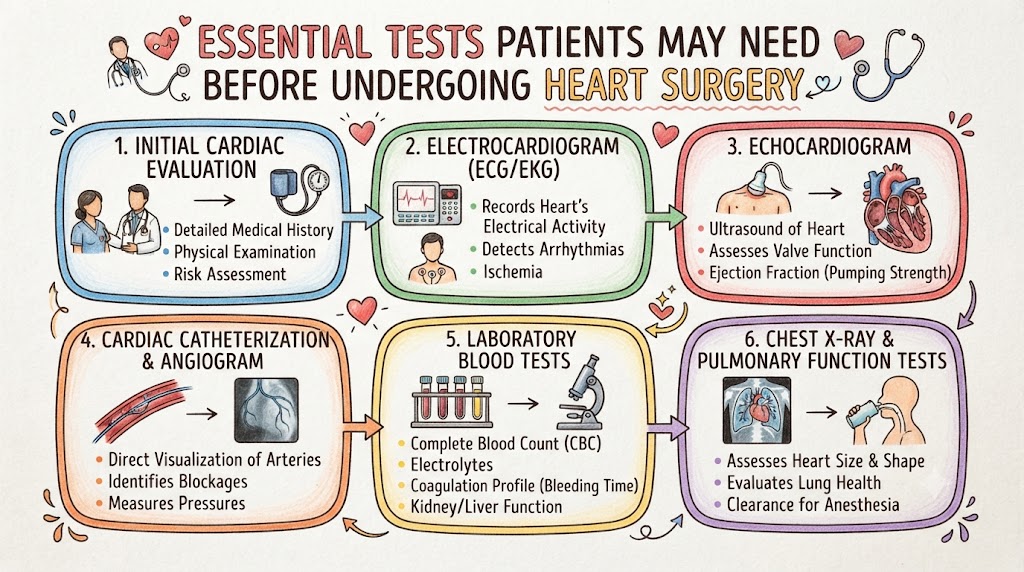
Preparing for heart surgery involves more than selecting a hospital and scheduling the operation. The cardiac team needs to understand how the heart is functioning, whether the lungs, kidneys, blood, and other organs are ready for surgery, and whether any correctable problem should be managed first. For this reason, patients may undergo several tests before heart surgery.
The test plan is individual. It depends on the proposed procedure, age, symptoms, previous operations, medical history, and whether surgery is planned or urgent. Some investigations are common, while others are ordered only when a specific concern needs evaluation.
Why Tests Before Heart Surgery Matter
Preoperative testing helps confirm the diagnosis, define the severity of the heart problem, estimate surgical and anaesthetic risk, and create baseline results for comparison after surgery. It may also identify anaemia, infection, abnormal kidney function, poorly controlled blood sugar, a rhythm problem, or another issue that can be managed before the operation.
An abnormal result does not automatically mean surgery will be cancelled. It may lead to treatment, repeat testing, specialist consultation, closer monitoring, a modified operation, or a short postponement when clinically appropriate.
Cardiac-surgery assessments commonly include an ECG, blood tests, chest imaging, an echocardiogram, infection screening, and a general health review. Hospitals do not use one identical checklist for everyone; tests are selected according to the operation and the patient’s condition.
Medical History and Physical Examination
Assessment usually begins with a detailed medical history. The team may ask about chest pain, breathlessness, fainting, swelling, previous heart attack or stroke, bleeding problems, allergies, sleep apnoea, diabetes, kidney disease, lung disease, dental problems, infections, and earlier operations.
Patients should provide a complete list of prescription medicines, non-prescription products, vitamins, and herbal supplements. Blood thinners, diabetes medicines, anti-inflammatory drugs, and some supplements may require special instructions. No medicine should be stopped without guidance from the treating team.
The examination may include blood pressure, pulse, temperature, oxygen level, breathing rate, weight, heart and lung sounds, and an airway assessment. The anaesthetist may also review previous reactions to anaesthesia.
Common Preoperative Cardiac Tests
| Test | What it may assess | How it supports planning |
|---|---|---|
| Blood tests | Blood count, kidney and liver function, electrolytes, glucose, clotting, and blood group | Identifies anaemia, organ concerns, bleeding risk, or possible transfusion needs |
| Electrocardiogram | Heart rate, rhythm, and electrical activity | Detects rhythm or conduction abnormalities and provides a baseline |
| Echocardiogram | Heart chambers, valves, pumping function, and blood flow | Defines the heart problem and supports procedure selection |
| Chest X-ray | Lungs, heart outline, and chest structures | May show congestion, infection, or other chest findings |
| Coronary angiography or CT angiography | Coronary arteries and selected heart or aortic anatomy | Maps narrowing and anatomy relevant to bypass, valve, or aortic surgery |
| Infection screening | Nasal or skin swabs, urine testing, or other tests when indicated | Identifies infections that may need treatment |
| Lung-function testing | Airflow and breathing capacity | Helps assess respiratory risk in selected patients |
| Carotid ultrasound | Blood flow in the neck arteries | May support stroke-risk assessment in selected patients |
This table describes common possibilities, not a universal package.
Blood Tests and Blood Preparation
A complete blood count checks haemoglobin, white blood cells, and platelets. Low haemoglobin may indicate anaemia, while unusual white-cell or platelet results may require further assessment. Kidney tests matter because surgery, contrast dye, medicines, and changes in circulation may place additional stress on the kidneys.
Electrolytes such as sodium and potassium support normal heart, muscle, and nerve function. Glucose testing is relevant for people with diabetes or possible high blood sugar. Liver tests and clotting studies may be ordered because the liver helps process medicines and produces proteins involved in clotting.
The hospital may confirm the patient’s blood group and reserve compatible blood when transfusion is a possibility. This preparation does not mean that every patient will require a transfusion.
Electrocardiogram
An electrocardiogram, also called an ECG or EKG, records the heart’s electrical activity. Adhesive electrodes are placed on the chest and limbs, and the test is usually quick and painless.
It may show atrial fibrillation, an unusually slow or fast rhythm, conduction changes, or patterns associated with previous heart damage. The result helps the surgery and anaesthesia teams plan monitoring and decide whether further rhythm assessment is needed.
Echocardiogram
An echocardiogram uses ultrasound to create moving images of the heart. It can assess valve structure, chamber size, pumping strength, wall motion, pressure estimates, and blood-flow direction. It is especially important before valve, congenital, and heart-muscle surgery.
A transthoracic echocardiogram uses a probe on the chest. Some patients need a transoesophageal echocardiogram, in which a probe is passed into the food pipe with appropriate sedation or anaesthesia. It can provide more detailed images of certain valves and structures.
Chest X-Ray and Advanced Imaging
A chest X-ray may show the heart’s outline, lung condition, fluid congestion, infection, and previous surgical material. Many cardiac centres include it in pre-assessment, although requirements vary.
CT or MRI may be ordered for detailed planning. CT angiography can evaluate coronary arteries and may show the aorta, calcium, previous grafts, or chest anatomy. It may be useful for aortic procedures, repeat operations, transcatheter planning, or minimally invasive surgery. Kidney function is often checked before contrast-based imaging.
Coronary Angiography
Coronary angiography uses contrast dye and X-rays to show blood flow through the coronary arteries. It is commonly used before coronary artery bypass grafting and may be considered before valve or aortic surgery when coronary disease is possible.
The findings help determine where narrowing is located and whether bypass grafting should be included in the operation. Because angiography is invasive, the care team should explain its benefits and risks. CT coronary angiography may be an alternative for selected patients.
Lung-Function and Oxygen Assessment
Lung-function tests may be requested for patients with chronic lung disease, a significant smoking history, unexplained breathlessness, pulmonary hypertension, or complex planned surgery. The results can guide inhaler treatment, breathing therapy, postoperative monitoring, and respiratory support. Formal testing is not required for everyone.
Infection Screening and Dental Review
Depending on hospital policy and symptoms, screening may include nasal or skin swabs for resistant bacteria, urine testing, or investigation of fever, cough, wounds, and other possible infections. Some cardiac centres screen for MRSA during pre-admission assessment.
Dental review may be advised before certain valve or congenital procedures, particularly when there is untreated dental infection. Good oral health may help reduce avoidable sources of bacteria entering the bloodstream. Patients should not arrange antibiotics themselves; the cardiologist, surgeon, and dentist should decide whether dental treatment or antibiotic prophylaxis is appropriate.
Tests for Selected Patients
A carotid Doppler ultrasound examines blood flow through neck arteries. It may be considered after a stroke or transient ischaemic attack, or when other findings suggest carotid disease.
Specialist review may be needed for kidney disease, difficult diabetes control, anaemia, clotting problems, or complex blood-thinner management. Pregnancy testing may be offered when the result could affect anaesthesia, imaging, or surgical planning.
Children undergoing congenital heart surgery commonly receive an ECG, echocardiogram, chest X-ray, and blood work. Paediatric teams adjust testing according to the child’s defect, age, growth, oxygen level, previous operations, and other medical needs.
How Results May Affect the Surgical Plan
| Finding | Possible response from the care team | What it may mean |
|---|---|---|
| Anaemia | Investigate the cause and provide appropriate treatment | The patient may need optimisation before surgery |
| Reduced kidney function | Adjust medicines, contrast use, fluids, or monitoring | Surgery may proceed with added precautions |
| Active infection | Treat and reassess the timing of planned surgery | A non-urgent operation may be delayed |
| Significant coronary narrowing | Add or modify bypass planning | The final procedure may change |
| Poor lung function | Begin respiratory treatment or plan extra support | Recovery may include breathing therapy |
| Irregular heart rhythm | Review medicines or plan rhythm management | Monitoring may be intensified |
| Carotid disease | Seek specialist review and plan stroke-risk management | Decisions depend on symptoms and severity |
| Unexpected imaging result | Order further imaging or hold a team discussion | More information may be needed before surgery |
Results must be interpreted together rather than in isolation. Patients should ask what each finding means for their own operation.
Preparing for the Preoperative Assessment
Patients should bring recent reports, original images, discharge summaries, a medicine list with doses, allergy details, and records of earlier procedures. International patients should collect angiograms, echocardiograms, CT scans, and laboratory reports before travelling.
Follow the hospital’s fasting and medicine instructions. Report allergies and any fever, cough, dental pain, urinary symptoms, wounds, or change in symptoms. Travel plans should allow for repeat tests or specialist reviews. Ask which investigations are included in the treatment estimate and which are billed separately.
Questions to Ask Before Choosing a Hospital or Surgeon
- Which tests are essential for this operation, and why?
- Are my existing reports recent enough to use?
- How often does the surgeon perform this procedure?
- Which surgeon will perform the operation?
- What risks apply to my individual condition?
- Could any result delay or change the operation?
- What is included in the cost estimate?
- Will tests be repeated after arrival?
- How long might hospitalization and ICU care last?
- What rehabilitation and follow-up are available?
- Who should be contacted if symptoms worsen?
- Is a second opinion advisable?
Frequently Asked Questions
1. Does every patient need all preoperative tests?
No. The test list depends on the operation, age, symptoms, medical history, and recent results. The cardiac and anaesthesia teams should explain why each investigation is needed.
2. When are tests performed before surgery?
Many are completed days or weeks before planned surgery. Blood tests, infection screens, or blood-group checks may be repeated closer to the operation because recent results are sometimes required.
3. Can previous reports be used?
Possibly. Their usefulness depends on their age, image quality, changes in the patient’s condition, and hospital policy. Original scans may be more useful than written summaries alone.
4. What happens when a blood test is abnormal?
The team may repeat it, investigate the cause, provide treatment, consult another specialist, or change monitoring. One abnormal value does not automatically prevent surgery.
5. Is coronary angiography required for everyone?
No. It is used when the coronary arteries need assessment. Surgery type, age, symptoms, risk factors, kidney function, and previous imaging influence the decision.
6. Is an echocardiogram painful?
A transthoracic echocardiogram is non-invasive and generally painless, although probe pressure may cause mild discomfort. A transoesophageal study requires additional preparation and monitoring.
7. Why is kidney function checked?
Kidney results influence contrast use, medicine doses, fluid management, and postoperative monitoring. They also help the team plan precautions for patients with reduced kidney function.
8. Can an infection delay surgery?
A planned procedure may be postponed when an active infection adds avoidable risk. The decision depends on the infection, the urgency of surgery, and specialist assessment.
9. Should blood thinners be stopped?
Only under direct medical instruction. Timing differs among medicines and procedures. Stopping a blood thinner independently may increase the risk of clots, stroke, or heart complications.
10. Must international patients repeat tests?
Sometimes. A hospital may repeat tests to confirm current findings, meet safety policies, or obtain preferred images. Patients should request a written pre-arrival test list and cost estimate.
Key Takeaways
- Preoperative testing is personalized; not every patient needs every test.
- Blood tests, ECG, echocardiography, chest imaging, and infection screening are commonly considered.
- Angiography, lung tests, carotid ultrasound, and advanced imaging are used selectively.
- Complete medicine, allergy, and medical-history information is essential.
- Abnormal findings may lead to treatment or added precautions, not automatic cancellation.
- Patients should ask about cost inclusions, repeated tests, recovery, and follow-up.
- A second opinion can be valuable before complex or high-risk surgery.
Conclusion
Tests before heart surgery help the medical team understand the heart condition, assess general health, and plan the procedure and recovery more carefully. The right test list differs for each patient, so patients should ask why each investigation is needed and how the result may affect treatment. Decisions should be made with a qualified cardiologist, cardiac surgeon, and anaesthetist, with a second opinion considered for major or complex procedures.

