
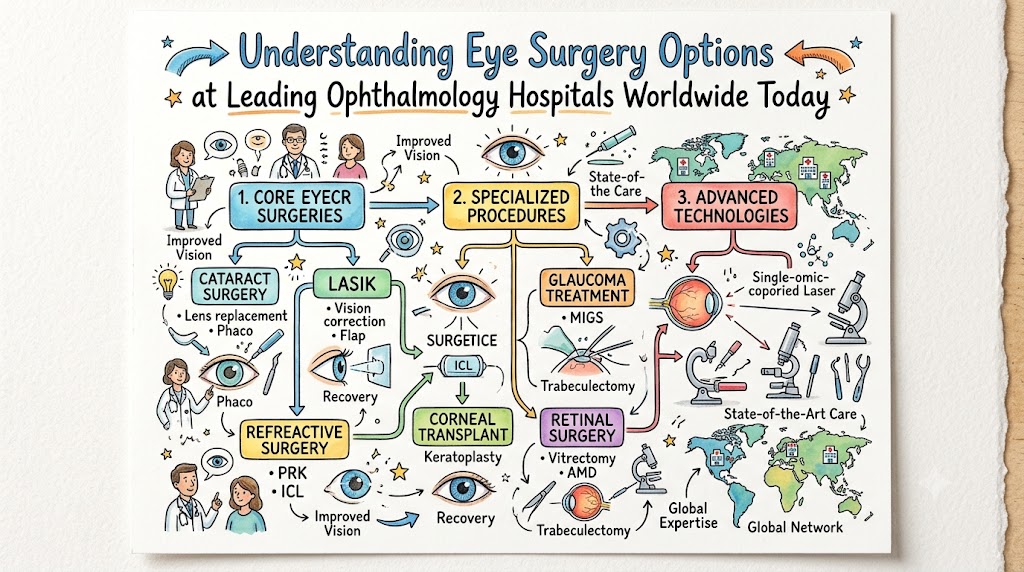
Modern ophthalmology hospitals provide surgical treatments for cataracts, refractive errors, glaucoma, retinal disease, corneal damage, eye-muscle disorders, and other complex conditions. However, the availability of advanced technology does not mean every procedure is suitable for every patient. The correct choice depends on the diagnosis, diagnostic findings, age, general health, visual needs, expected benefits, possible risks, and the experience of the treating ophthalmologist.
Patients comparing the best ophthalmology hospitals should therefore look beyond rankings, advertisements, and equipment lists. Surgeon expertise, careful patient selection, infection control, transparent communication, emergency support, and structured follow-up care are equally important. BestEyeHospitals.com serves as an informational resource to help patients research and compare hospitals, specialists, procedures, treatment costs, and possible treatment destinations without guaranteeing the quality or outcome of care.
What Makes an Ophthalmology Hospital a Leading Centre?
The term “leading hospital” is often used in advertising, but patients need practical and measurable comparison criteria.
A hospital may be considered well equipped for eye surgery when it offers:
- Qualified ophthalmologists across relevant subspecialties
- Comprehensive diagnostic testing
- Experienced surgical teams
- Appropriate technology for different conditions
- Clearly documented infection-control procedures
- Current hospital or eye-care accreditation
- Written informed-consent processes
- Emergency ophthalmology support
- Transparent treatment quotations
- Structured postoperative monitoring
- Access to multidisciplinary care for complex patients
- Clear communication with patients and families
Healthcare accreditation generally involves evaluating an organisation against defined standards. It can support quality improvement and patient safety, but it should not be treated as proof that every patient will receive a particular result.
Major Eye Surgery Options Available Worldwide
The services offered by the best eye surgery hospitals differ according to their specialists, regulatory approvals, equipment, eye-bank access, and local healthcare systems.
| Surgical Category | Common Conditions Treated | Examples of Procedures |
|---|---|---|
| Cataract and lens surgery | Cloudy natural lens, selected lens-related vision problems | Phacoemulsification, intraocular lens implantation |
| Refractive surgery | Myopia, hyperopia, and astigmatism | LASIK, PRK, and other approved refractive procedures |
| Glaucoma procedures | Eye-pressure-related optic-nerve damage | Laser treatment, MIGS, trabeculectomy, drainage implants |
| Retina and vitreous surgery | Retinal tears, detachment, vitreous problems, selected macular conditions | Laser treatment, pneumatic procedures, scleral buckle, vitrectomy |
| Corneal surgery | Corneal scarring, dystrophy, keratoconus, endothelial disease | Corneal cross-linking, partial or full-thickness transplant |
| Eye-muscle surgery | Certain forms of strabismus or eye misalignment | Eye-muscle adjustment procedures |
| Oculoplastic surgery | Eyelid, tear-duct, socket, or orbital conditions | Eyelid repair, tear-duct surgery, reconstructive procedures |
Cataract and Intraocular Lens Surgery
What Cataract Surgery Involves
A cataract occurs when the eye’s natural lens becomes cloudy. Cataract surgery removes the cloudy lens and replaces it with a clear artificial intraocular lens, commonly called an IOL. It is usually performed as a day procedure, although the exact surgical plan and recovery instructions vary by patient.
Patients may be offered different IOL categories, including:
- Monofocal lenses
- Toric lenses for selected levels of astigmatism
- Multifocal lenses
- Extended-depth-of-focus lenses
- Other specialised lens designs
No single IOL is best for every patient. The decision may depend on retinal health, glaucoma, corneal shape, previous eye surgery, driving requirements, reading habits, occupation, budget, and willingness to use glasses.
What to Compare at Cataract Surgery Hospitals
Patients should check whether the hospital provides:
- Accurate biometry and IOL calculations
- Corneal measurements
- Dilated retinal examinations
- Macular imaging when clinically required
- A choice of medically appropriate lenses
- Support for complex cataract cases
- Retina or glaucoma specialists when needed
- Clear information about possible use of glasses after surgery
- Scheduled postoperative examinations
The hospital should explain whether the proposed lens is medically necessary or an optional upgrade. Higher price does not automatically mean greater suitability.
LASIK and Other Refractive Surgery Options
Understanding LASIK
LASIK is intended to reduce dependence on glasses or contact lenses by reshaping the cornea. It may be used for certain refractive errors, but it cannot guarantee perfect vision or permanent freedom from corrective lenses. Some patients continue to need glasses, and age-related near-vision changes may create a future need for reading glasses.
Potential risks can include:
- Dry-eye symptoms
- Glare
- Halos around lights
- Double or ghosted images
- Night-vision difficulty
- Undercorrection
- Overcorrection
- Continued need for glasses
- Need for further treatment where clinically possible
The FDA advises prospective patients to understand candidacy, risks, procedure limitations, surgeon selection, and preoperative and postoperative expectations before choosing LASIK.
Alternative Refractive Procedures
Depending on the patient’s measurements and local approvals, a refractive surgeon may discuss:
- Photorefractive keratectomy, or PRK
- Surface laser procedures
- Small-incision lenticule-based procedures
- Implantable lenses
- Refractive lens exchange
- Continued use of glasses or contact lenses
Glasses remain the simplest and generally safest method of correcting refractive errors. Surgery is an elective option for appropriately selected patients rather than a requirement.
Essential Preoperative LASIK Tests
A responsible hospital should evaluate:
- Prescription stability
- Corneal thickness
- Corneal shape and regularity
- Tear-film health
- Pupil size
- Eye pressure
- Retinal health
- Previous eye operations
- Current medicines
- Pregnancy or breastfeeding status
- General medical conditions
- Realistic visual expectations
Patients should be cautious when surgery is offered immediately without comprehensive testing or when the provider does not explain why the chosen procedure is appropriate.
Glaucoma Laser and Surgical Procedures
Glaucoma can damage the optic nerve and cause permanent vision loss. Treatment may involve eye drops, laser procedures, or surgery. Treatment cannot restore vision already lost from glaucoma, but it may help protect remaining vision and reduce the risk of further damage.
Laser Treatment for Glaucoma
Laser treatment may improve drainage of fluid from the eye and lower eye pressure in certain forms of glaucoma. Some laser treatments can be performed in an outpatient clinic.
Minimally Invasive Glaucoma Surgery
Minimally invasive glaucoma surgery, frequently called MIGS, includes several procedures designed to improve fluid drainage with smaller surgical interventions than some traditional operations.
MIGS may be considered for selected patients, sometimes in combination with cataract surgery. It is not necessarily appropriate for every type or stage of glaucoma.
Trabeculectomy and Drainage Implants
For patients requiring greater pressure reduction, an ophthalmologist may discuss:
- Trabeculectomy
- Glaucoma drainage implants
- Cyclodestructive procedures
- Other specialised operations
The proposed procedure should reflect glaucoma type, disease severity, previous treatment, target pressure, age, eye anatomy, and risk of continued vision loss.
Retina and Vitreous Surgery
Retinal conditions can be urgent and may require access to a vitreoretinal surgeon, advanced retinal imaging, operating-theatre facilities, and emergency follow-up.
Retinal Tears and Detachment
A retinal tear may sometimes be treated with laser photocoagulation or freezing treatment to create a seal around the affected area. Retinal detachment may require procedures such as pneumatic retinopexy, scleral buckling, vitrectomy, or a combination of treatments.
Symptoms that may indicate retinal detachment include:
- A sudden increase in floaters
- Flashes of light
- A dark curtain or shadow in the field of vision
- Sudden loss of part of the visual field
- Rapidly worsening vision
Retinal detachment is a medical emergency. People experiencing these symptoms should seek urgent professional assessment rather than waiting for a routine hospital-comparison process.
Vitrectomy
Vitrectomy removes some or all of the vitreous gel from inside the eye so the surgeon can treat certain retinal or vitreous conditions. Recovery can involve temporary redness, swelling, discomfort, blurred vision, activity restrictions, and multiple follow-up appointments.
Some retinal procedures use a gas bubble. When this is required, patients may need specific head-positioning instructions and restrictions on flying or travelling to high altitudes until cleared by their ophthalmologist.
Corneal Surgery and Transplantation
Corneal surgery may be required when disease, injury, scarring, infection, or inherited conditions reduce corneal clarity or function.
Corneal Cross-Linking
Corneal cross-linking may be considered for certain patients with progressive keratoconus. Its main purpose is generally to strengthen the cornea and reduce further progression rather than guarantee normal unaided vision.
Patients may still require glasses, specialised contact lenses, or other visual correction after treatment.
Corneal Transplantation
A corneal transplant replaces damaged corneal tissue with healthy donor tissue. Depending on the affected corneal layer, the ophthalmologist may recommend a full-thickness or partial-thickness transplant. Corneal transplantation is commonly performed as an outpatient procedure, but careful follow-up is essential.
Patients should ask about:
- Donor-tissue availability
- Eye-bank standards
- Type of transplant proposed
- Surgeon experience
- Risk of graft rejection
- Required medicines
- Expected recovery period
- Frequency of follow-up
- Emergency symptoms
- Long-term monitoring
Corneal transplant recovery can take longer than recovery from many common refractive procedures. The patient should understand that visual improvement may be gradual and that glasses or contact lenses may still be required.
Eye-Muscle and Pediatric Eye Surgery
Some ophthalmology hospitals have dedicated pediatric ophthalmology and strabismus departments. Surgery may be considered for certain eye-alignment disorders, congenital cataracts, childhood glaucoma, eyelid conditions, or other structural problems.
Children require services designed around their age and condition, including:
- Pediatric ophthalmologists
- Child-friendly diagnostic testing
- Pediatric anaesthesia
- Orthoptic assessment
- Family counselling
- Long-term visual-development monitoring
- Amblyopia treatment where needed
Surgery that improves eye alignment does not automatically correct amblyopia. Children may still require glasses, patching, eye drops, or other treatment recommended by their specialist.
How to Compare Ophthalmology Hospitals Worldwide
Patients should compare hospitals using consistent criteria rather than selecting a destination only because it is internationally known.
| Comparison Factor | What to Verify | Why It Matters |
|---|---|---|
| Surgeon expertise | Qualifications, registration, subspecialty, case experience | Matches clinical expertise with the condition |
| Hospital accreditation | Current status and facility covered | Indicates structured external evaluation |
| Diagnostic services | Scans, measurements, laboratory support | Supports diagnosis and surgical planning |
| Surgical facilities | Sterilisation, equipment maintenance, backup systems | Supports safety and continuity |
| Multidisciplinary care | Access to retina, glaucoma, cornea, medicine, anaesthesia | Important for complex conditions |
| Treatment explanation | Alternatives, risks, limitations, expected recovery | Supports informed consent |
| Cost transparency | Itemised written quotation | Helps prevent unexpected expenses |
| Emergency care | Urgent contact system and after-hours support | Important after surgery |
| Follow-up programme | Timing, location, remote support, local coordination | Supports recovery and early problem detection |
| Medical records | Copies of scans, reports, implants, and discharge notes | Helps with future care and second opinions |
Technology Patients May Encounter
Modern ophthalmology hospitals may use:
- Optical coherence tomography
- Corneal topography and tomography
- Optical biometry
- Fundus photography
- Wide-field retinal imaging
- Ultrasound imaging
- Visual-field testing
- Femtosecond laser systems
- Excimer laser systems
- Eye-tracking technology
- Modern phacoemulsification platforms
- Small-gauge vitrectomy systems
- Surgical microscopes with digital imaging
Advanced equipment can support diagnosis and treatment, but it does not independently determine the outcome. The skill of the clinical team, correct interpretation of test results, proper patient selection, equipment maintenance, infection prevention, and follow-up care remain essential.
Factors Affecting Eye Surgery Costs Worldwide
Eye surgery prices can vary considerably between hospitals, cities, and countries.
Clinical Factors
Costs may be affected by:
- Type of eye condition
- Complexity of the procedure
- Treatment of one eye or both eyes
- Previous eye surgery
- Additional eye diseases
- General medical conditions
- Anaesthesia requirements
- Need for multiple specialists
- Required implants or donor tissue
- Possibility of staged treatment
Hospital and Technology Factors
Costs can also depend on:
- Hospital category
- Surgeon’s professional fee
- Diagnostic technology
- Operating-theatre charges
- Type and brand of implant
- Length of hospital stay
- Medicines and disposable supplies
- Number of follow-up visits
- Emergency-care provisions
- Rehabilitation requirements
Travel-Related Expenses
International and out-of-city patients may also need to budget for:
- Flights or local transport
- Accommodation
- Medical visas
- Travel insurance
- An accompanying family member
- Translation assistance
- Additional days after surgery
- Changes to return travel
- Local follow-up after returning home
Patients should request a complete written estimate rather than comparing only the advertised surgical fee.
Questions Patients Should Ask Before Eye Surgery
- What is my complete diagnosis?
- Is surgery necessary now?
- Are non-surgical alternatives available?
- What procedure is being recommended?
- Why is this procedure suitable for my eye?
- What are the main benefits and limitations?
- What are the possible complications?
- How experienced is the surgeon with similar cases?
- Which diagnostic tests are required?
- Which technology or implant will be used?
- Will I need glasses after surgery?
- What is included in the written quotation?
- How long should I remain near the hospital?
- How many follow-up appointments are required?
- Who will manage complications after I return home?
- Can I receive copies of my scans and surgical records?
- Should I seek a second opinion?
- What symptoms require emergency attention?
Common Mistakes Patients Should Avoid
Choosing a Hospital Only by Reputation
A famous hospital may have several departments and surgeons with different levels of subspecialty experience. Patients should evaluate the specific surgeon and facility involved in their care.
Selecting the Newest Procedure Without Proper Screening
A newer procedure is not automatically safer or more effective for every patient. Clinical suitability should guide the choice.
Relying on Guaranteed-Result Claims
No hospital can responsibly guarantee perfect vision, permanent spectacle independence, painless surgery, or a risk-free outcome.
Comparing Only the Initial Price
Low-cost quotations may exclude tests, implants, medicines, anaesthesia, follow-up visits, or complication management.
Hiding Medical Information
Patients should disclose medicines, allergies, pregnancy, diabetes, autoimmune conditions, previous operations, and existing eye diseases.
Travelling Home Too Soon
Early travel may interfere with follow-up or make it difficult to obtain urgent care. Travel plans should be approved by the treating ophthalmologist.
Skipping Postoperative Appointments
A patient may feel comfortable even when healing needs clinical review. Scheduled examinations should not be missed without speaking to the medical team.
Ignoring Second Opinions
A second opinion may be useful before complex, irreversible, expensive, or high-risk procedures.
Practical Tips for International Patients
- Obtain an examination or remote record review before travelling.
- Ask whether the final procedure can change after in-person testing.
- Confirm the required length of stay.
- Carry previous scans and medical records.
- Verify the treating surgeon’s credentials.
- Request a written treatment and cost plan.
- Arrange accommodation close to the hospital.
- Avoid non-refundable return tickets immediately after surgery.
- Confirm restrictions involving flying and altitude.
- Arrange a local ophthalmologist for continued care.
- Keep copies of prescriptions, implant information, and discharge records.
- Learn how to contact the hospital in an emergency.
Key Takeaways
- Eye surgery includes cataract, refractive, glaucoma, retinal, corneal, pediatric, and reconstructive procedures.
- The correct procedure depends on a complete diagnosis and individual examination.
- The newest technology is not automatically the most appropriate choice.
- Surgeon experience and subspecialty training are important comparison factors.
- Accreditation supports structured quality evaluation but cannot guarantee results.
- Written informed consent should explain benefits, risks, alternatives, and limitations.
- Patients should compare complete treatment costs rather than advertised prices.
- International patients require detailed travel and follow-up planning.
- Emergency symptoms should receive immediate medical attention.
- BestEyeHospitals.com can support research and comparison but does not replace professional medical advice.
Frequently Asked Questions
1. What are the most common types of eye surgery?
Common categories include cataract surgery, refractive surgery, glaucoma procedures, retinal surgery, corneal transplantation, eye-muscle surgery, and eyelid or tear-duct procedures.
2. How should patients identify the best eye hospitals in the world?
Patients should compare the relevant surgeon’s qualifications, subspecialty experience, hospital accreditation, diagnostic services, surgical safety, cost transparency, emergency support, and follow-up programme.
3. Does advanced technology guarantee better eye-surgery results?
No. Technology may assist diagnosis and surgical precision, but results also depend on patient selection, surgeon experience, equipment maintenance, eye health, and postoperative care.
4. Is LASIK suitable for everyone who wears glasses?
No. Suitability depends on prescription stability, corneal measurements, tear-film health, eye disease, general health, and other clinical factors.
5. Can cataract surgery remove the need for glasses?
Some patients become less dependent on glasses, but others still need them for reading, distance vision, driving, or particular tasks. The outcome depends partly on the selected IOL and the health of the eye.
6. Can glaucoma surgery restore lost vision?
Glaucoma surgery cannot restore vision already lost from optic-nerve damage. Its purpose is generally to lower eye pressure and help protect remaining vision.
7. Is retinal surgery always an emergency?
Not every retinal procedure is an emergency. However, symptoms such as sudden flashes, many new floaters, a dark curtain, or sudden visual-field loss require urgent assessment because they may indicate retinal detachment.
8. How long does eye-surgery recovery take?
Recovery ranges from days to several months depending on the procedure, condition, complications, and individual healing. The treating ophthalmologist should provide a personalised recovery plan.
9. Is international eye treatment always less expensive?
Not necessarily. Patients must include testing, implants, medicines, travel, accommodation, follow-up, insurance limitations, and possible extended stays when comparing overall costs.
10. Should patients get a second opinion before eye surgery?
A second opinion can be helpful for complex conditions, irreversible procedures, expensive implants, uncertain diagnoses, or treatment plans that have not been clearly explained.
Conclusion
Understanding eye surgery options at leading ophthalmology hospitals worldwide requires more than comparing hospital names, rankings, or technology. Patients should begin with a complete diagnosis and then evaluate the relevant ophthalmologist’s experience, hospital safety standards, diagnostic facilities, proposed procedure, expected limitations, total costs, and follow-up arrangements. Cataract, LASIK, glaucoma, retinal, and corneal procedures serve different purposes and involve different risks and recovery requirements. A qualified ophthalmologist should provide personalised guidance based on examination findings, medical history, visual needs, and realistic expectations.

