
Introduction
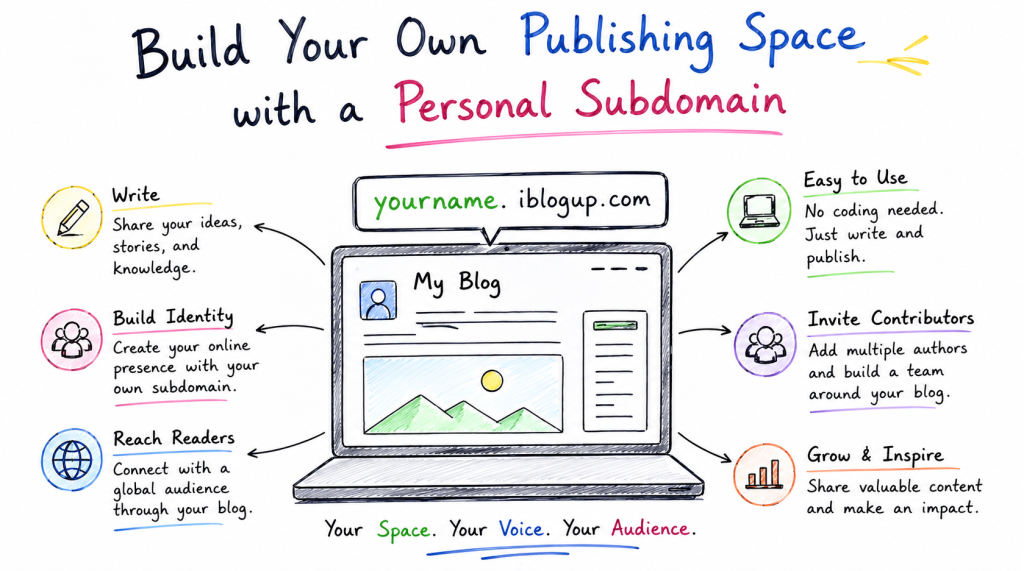
Publishing ideas online once required technical knowledge, paid website hosting, and experience with website design. Today, writers can build a clear online identity without handling these complicated tasks. A personal subdomain gives beginners a simple way to create their own publishing space while remaining part of a larger blogging platform.
A free blog with subdomain can be useful for writers, students, educators, professionals, and storytellers who want a dedicated place for their work. Instead of publishing unrelated posts across different websites, they can organise their articles under one recognisable blog address.
This approach makes online publishing more accessible. You can focus on choosing meaningful topics, improving your writing, and creating helpful content rather than managing servers or learning code.
This guide explains personal subdomains, their role in building a publishing identity, the qualities to examine when choosing a platform, and the practical steps involved in starting a personal blog.
Understanding a Personal Publishing Space
A personal publishing space is an online location where your articles, stories, opinions, guides, or professional insights are presented together. It acts as the central home for your written work.
Unlike posting occasional messages on social networks, a personal blog allows you to organise complete articles around specific subjects. Readers can understand who you are, what you write about, and the type of knowledge or experiences you share.
A personal blogging platform normally provides the tools required to create, edit, organise, and publish content. A beginner-friendly platform removes much of the technical work involved in running an independent website.
Your publishing space may include:
- A blog name
- A personal subdomain
- A writer profile
- Published articles
- Content categories
- A consistent writing style
- Contributions from other writers when supported
Together, these elements form a recognisable online writing identity.
Understanding a Personal Subdomain
A subdomain is an individual section of a larger website. It gives your blog its own identifiable address while the main platform manages the technical infrastructure.
For example, imagine that a blogging platform is a large building. Every writer receives a separate room inside that building. The building represents the main website, while your room represents your personal subdomain.
The platform manages the overall structure, security, hosting, and publishing system. You manage the ideas and articles presented inside your individual space.
This arrangement is particularly useful for beginners because it removes the need to purchase and configure a separate domain before publishing. A free blogging platform can provide the basic space required to begin developing an online presence.
A personal subdomain also looks more organised than publishing everything under a general profile page. It gives readers a clearer connection between the blog name, the writer, and the published content.
Personal Subdomains and Custom Domains
A personal subdomain and a custom domain are not the same thing.
A custom domain is a completely independent website address that someone usually purchases from a domain registrar. It may also require paid hosting, technical configuration, renewals, and website maintenance.
A personal subdomain remains connected to the main blogging platform. The platform provides the publishing environment, while the writer receives an individual blog identity within it.
For many new writers, a subdomain is a practical starting point because it offers several advantages:
- No separate domain purchase is necessary
- Hosting is managed by the platform
- Technical setup is limited
- Publishing can begin more quickly
- The blog has a recognisable individual identity
- Writers can learn before considering an independent website
A custom domain may suit advanced users with specific business or technical requirements. However, a free blog with personal subdomain can provide enough structure for students, independent writers, professionals, and creative storytellers who mainly want to publish useful content.
The Value of Having Your Own Publishing Identity
A personal publishing identity helps readers recognise your work over time. It connects your name, blog topic, writing style, and collection of articles.
When your work is presented in one organised space, readers do not have to search through unrelated posts to understand your interests. They can explore your previous articles and identify the subjects you regularly discuss.
This identity can support several goals.
Creating a Public Writing Portfolio
Students and new writers can use a personal blog to demonstrate their communication skills. Published articles can show how they research topics, explain ideas, structure information, and present original viewpoints.
A portfolio does not need to contain hundreds of posts. A smaller collection of thoughtful and well-edited articles can still represent the writer effectively.
Sharing Professional Knowledge
Professionals can publish lessons, industry observations, practical guides, and career experiences. This can help them document what they know and communicate complex subjects in a clear way.
The purpose should be to educate readers rather than simply promote professional services.
Developing a Recognisable Voice
Writers gradually develop a personal voice through regular practice. Some writers are analytical, while others use storytelling, practical examples, or reflective observations.
A dedicated publishing space allows this voice to become more consistent across multiple articles.
Organising Ideas in One Location
Publishing in several unrelated places can make content difficult to manage. A personal blogging platform keeps articles connected to one identity and makes it easier to build a focused collection of work.
Important Qualities of a Free Blog with Subdomain
Not every online blogging platform offers the same experience. Before selecting one, examine whether its features match your publishing goals.
Simple Account Creation
The registration process should be easy to understand. Beginners should not have to complete unnecessary technical steps before they can begin writing.
A convenient sign-in method can reduce account setup difficulties and allow users to reach the publishing interface more quickly.
Clear Subdomain Selection
Your subdomain should be readable, memorable, and connected to your name or subject. The selection process should also explain whether a chosen name is available.
Complicated spelling, excessive numbers, or unclear abbreviations can make the blog harder to remember.
No-Code Publishing
A no-code blogging platform allows users to publish without writing HTML, CSS, or other programming languages. This is important for writers who want to concentrate on content rather than website development.
The writing interface should make it easy to add headings, paragraphs, lists, and other essential formatting.
Free Blog Hosting
Free blog hosting means the platform manages the technical systems that keep the blog available online. Writers do not need to purchase a separate hosting package or configure a server.
However, users should still review the platform’s rules and understand that the blog operates within its publishing environment.
Comfortable Reading Experience
Articles should remain readable on desktop computers, tablets, and mobile devices. Short paragraphs, useful headings, and clean formatting also help readers follow the content.
A good reader experience depends on both the platform design and the writer’s formatting choices.
Community Discovery
A community blogging platform may provide a shared feed where readers can discover content from different writers. This creates opportunities for independent voices to be seen within a wider publishing environment.
Discovery does not guarantee traffic, but it can help readers encounter articles beyond the blogs they already know.
Support for Multiple Contributors
Some blogs are created by one writer, while others involve a team. A multi-author blogging platform can help educators, professional groups, writing communities, and small organisations publish under one shared blog identity.
Before inviting contributors, define the publication topic, writing standards, editing responsibilities, and approval process.
Choosing a Strong Personal Subdomain
Your subdomain becomes part of your blog identity, so it deserves careful consideration.
A good subdomain is normally:
- Short enough to remember
- Easy to type
- Closely connected to the blog
- Free from confusing characters
- Flexible enough for future content
- Appropriate for an international audience
Using your own name can work well when the blog focuses on your professional knowledge, opinions, or personal experiences.
A topic-based name may be more suitable when the blog focuses on a specific area such as education, technology, travel, career development, poetry, or storytelling.
Avoid selecting an extremely narrow name unless you are certain that the blog will remain limited to that subject. A name focused on one small topic may feel restrictive when your interests expand.
It is also useful to say the name aloud. If it is difficult to pronounce or explain, readers may struggle to remember it.
Steps to Build Your Own Publishing Space
Starting a personal blog becomes easier when you follow a clear process.
1. Define the Purpose of Your Blog
Begin by deciding why you want to publish.
Your purpose might be to:
- Share professional knowledge
- Build a student portfolio
- Publish personal stories
- Explain educational topics
- Document travel experiences
- Write poetry or fiction
- Explore opinions and ideas
- Improve your writing through practice
A clear purpose helps you choose suitable topics and maintain consistency.
2. Identify Your Main Reader
Think about the person who will benefit from your content.
A technology beginner needs different explanations than an experienced professional. A student looking for career guidance has different needs from someone searching for travel stories.
Writing for a defined reader makes your articles more focused.
3. Select a Suitable Blogging Platform
Look for a free blogging platform for beginners that provides simple publishing, a personal subdomain, readable article pages, and a manageable writing interface.
Also consider whether you want to participate in a wider blogging community or invite contributors later.
4. Create Your Account
Follow the platform’s registration process and provide accurate profile information. Choose a name that you are comfortable using publicly.
Your profile should briefly explain who you are and what readers can expect from your blog.
5. Choose Your Personal Subdomain
Select a subdomain that represents your identity or subject. Keep it simple, professional, and easy to communicate.
Check the spelling carefully before confirming it. A spelling error can weaken the blog’s identity and create confusion.
6. Decide on a Blog Name
Your blog name may be similar to your subdomain, but it should also clearly communicate the blog’s direction.
A descriptive name helps visitors understand the subject before reading an article.
7. Plan Your First Few Topics
Do not wait until the blog is created to decide what to write. Prepare a small list of article ideas in advance.
For example, an educator might begin with:
- A beginner’s introduction to the subject
- A guide to common mistakes
- A practical learning checklist
- A personal teaching experience
- A collection of useful study tips
Planning several topics reduces the pressure of finding a new idea after every publication.
8. Write a Helpful First Article
Your first article does not need to explain your entire life or professional background. It should give readers something useful.
Choose one clear topic, create a descriptive title, organise the article with headings, and support your main points with practical examples.
9. Edit Before Publishing
Review the article for spelling, grammar, repetition, and unclear sentences.
Ask yourself:
- Does the title match the content?
- Is the opening interesting and relevant?
- Are the paragraphs easy to read?
- Does each section provide useful information?
- Have unnecessary words been removed?
- Is the content original?
Editing improves both credibility and reader experience.
10. Publish at a Realistic Pace
Consistency is helpful, but it does not require daily publishing. A realistic schedule might be one well-prepared article every week, every two weeks, or once a month.
Choose a routine that fits your available time and the amount of research your topics require.
Publishing Ideas for Different Types of Writers
A personal subdomain can support many kinds of publishing projects.
Students
Students can publish essays, project summaries, research reflections, learning notes, and career observations. Over time, the blog can become a public portfolio of their interests and communication skills.
Professionals
Professionals can explain industry concepts, share workplace lessons, discuss skill development, and publish practical guides. They should avoid revealing confidential company or customer information.
Educators
Teachers and trainers can publish learning resources, topic explanations, study methods, and classroom observations. A blog can help them organise educational material in one accessible space.
Creative Writers
Poets, fiction writers, and storytellers can use a story publishing platform to share original creative work. They can also publish reflections about their writing process and sources of inspiration.
Travellers and Lifestyle Writers
Travel and lifestyle writers can document personal experiences, cultural observations, local lessons, routines, and practical advice. Their content should remain accurate and respectful of the people and places discussed.
Collaborative Teams
A collaborative blogging platform can help a group publish articles under one shared identity. Team members may contribute different viewpoints while following the same editorial direction.
Common Challenges and Practical Solutions
Difficulty Choosing a Topic
New writers often choose subjects that are too broad.
Instead of writing about “business,” focus on a specific subject such as communication lessons for new team leaders. A narrower topic gives the article a clearer purpose.
Inconsistent Publishing
Writers may begin enthusiastically and then stop publishing.
Create a manageable schedule and maintain a list of future topics. It is better to publish one useful article each month than several rushed articles followed by a long absence.
Expecting Immediate Attention
A new blog may not receive many readers at first. Audience development usually requires patience, useful content, and continued participation.
Focus on building a valuable collection of articles rather than judging the blog after its first few posts.
Copying Existing Content
Reading other blogs can provide inspiration, but copying their structure or wording weakens originality.
Use your own examples, experiences, explanations, and conclusions. When discussing a common subject, find a specific angle that reflects your knowledge.
Overusing Keywords
Keywords can help clarify the subject, but repeating the same phrase too often makes writing uncomfortable to read.
Use related terms naturally and prioritise the reader’s understanding.
Ignoring Proofreading
Small errors can reduce trust in otherwise valuable content.
Read the article slowly, check difficult sentences, and review the final version after taking a short break from writing.
Tips for Developing Your Publishing Space
Your subdomain gives the blog an address, but the quality of your publishing habits gives it value.
Use descriptive titles that clearly represent each article. Avoid misleading claims designed only to attract clicks.
Keep paragraphs reasonably short, especially for mobile readers. Use headings to divide longer articles into meaningful sections.
Develop a consistent group of topics. You do not need to write about only one subject, but related content helps readers understand the blog’s purpose.
Publish original work based on genuine knowledge, research, observation, or experience. Do not create articles simply to fill space.
Respond respectfully when readers or other writers share different opinions. A healthy blogging community depends on constructive communication.
Review your previous content occasionally. Older articles may reveal subjects that deserve deeper explanation or a follow-up post.
Most importantly, allow your publishing identity to develop naturally. Your first few articles may not perfectly represent your final writing style. Regular writing, editing, and reflection will help you improve.
iBlogUp as a Personal Publishing Option
iBlogUp provides a practical environment for writers who want to start a personal blog without managing coding or separate hosting.
Writers can claim a personal iBlogUp subdomain and use it to establish an individual publishing identity. The platform supports a simple no-code writing experience and Google-based sign-in, making account access and publishing more approachable for beginners.
Published stories can appear within a shared discovery feed, where readers can explore work from different independent voices. The platform also supports multiple contributors, which can be helpful for collaborative blogs and multi-author publications.
These features make iBlogUp a relevant option for writers, students, professionals, educators, and storytellers who want a free online publishing platform. As with any platform, users should begin with a clear purpose, publish original work, and follow the community’s content guidelines.
Frequently Asked Questions
1. Can beginners create a personal blog for free?
Yes. Beginners can use a free blogging platform that includes publishing tools and hosting. This removes the need to purchase hosting or build a website from the beginning. They should still compare the platform’s features, rules, subdomain options, and publishing experience before creating their blog.
2. Is coding required to use a personal subdomain?
Coding is generally not required when the subdomain is provided by a no-code blogging platform. The platform manages the website structure and technical hosting. Writers can usually create articles through a visual publishing interface that supports headings, paragraphs, and basic formatting.
3. Does a subdomain belong completely to the writer?
A subdomain provides an individual identity within a larger platform, but it remains part of that platform’s main domain and publishing environment. Writers should review the terms and content policies to understand their responsibilities and how the platform manages accounts and published material.
4. Can a personal blog work as a professional portfolio?
Yes. A blog can display articles, explanations, case reflections, learning experiences, and professional insights. It can demonstrate writing ability and subject knowledge. Writers should avoid sharing confidential information and should publish accurate, thoughtful, and well-edited content.
5. What subjects can be published on a personal blog?
Writers can cover areas such as technology, business, education, travel, lifestyle, careers, personal experiences, poetry, opinions, creative writing, and professional knowledge. The selected subjects should match the platform’s guidelines and the writer’s intended audience.
6. How often should a new blogger publish?
There is no single schedule that works for everyone. Beginners should choose a realistic routine based on their time and topic complexity. Publishing one useful article every two weeks may be more sustainable than attempting daily posts without enough time for research and editing.
7. Can several writers publish on the same blog?
They can when the selected platform supports multiple contributors. A multi-author blog should have a clear topic, contributor roles, writing standards, and an editing process. These guidelines help the publication maintain consistency even when articles are written by different people.
8. How can writers attract readers to a new subdomain?
Writers can improve discovery by publishing original articles, selecting clear topics, using descriptive titles, maintaining readable formatting, and participating respectfully in the writing community. Growth usually takes time, and no platform can guarantee a specific number of readers or search-engine visibility.
Conclusion
A personal subdomain offers a practical bridge between casual online posting and managing a completely independent website. It gives your articles a recognisable home, helps organise your work, and allows readers to connect your name with the subjects you publish.
Building a valuable publishing space requires more than selecting an address. You need a clear purpose, relevant topics, original writing, careful editing, and a realistic publishing routine. These habits gradually shape your online identity and make your collection of work more useful.
A free blog with subdomain is especially suitable for beginners who want to publish without handling coding, hosting, or complex website configuration. iBlogUp supports this approach by offering personal subdomains, no-code publishing, community discovery, and multi-author support.

