
Introduction
Becoming a professional pilot requires a combination of practical flying skills, aviation knowledge, discipline, and proper certification. While flight training helps students develop aircraft handling abilities, theoretical knowledge plays an equally important role in building a safe and competent pilot.
For aspiring pilots in India, DGCA exams are an important part of the pilot training journey. These examinations evaluate a student’s understanding of essential aviation subjects required for progressing toward pilot licensing and professional aviation responsibilities.
Many beginner pilots focus mainly on flight hours and aircraft practice but underestimate the importance of theoretical preparation. A strong understanding of navigation, weather, aviation regulations, aircraft systems, and operational procedures helps pilots make better decisions during real flying situations.
Proper planning and consistent preparation can make the DGCA examination process more manageable. Students who understand the exam structure, study requirements, and preparation methods can approach their pilot training journey with greater confidence.
Real-world examples:
- A student pilot creates a study schedule to prepare DGCA subjects while continuing flight training.
- An aviation learner focuses on understanding navigation concepts before applying them during practical flying lessons.
- A beginner pilot studies aviation regulations early to develop better awareness of operational responsibilities.
Evaluation Criteria for Choosing the Right DGCA Exam Preparation Approach
Preparing for DGCA exams requires more than reading textbooks. Students should consider several important factors when creating their preparation strategy.
Understanding DGCA Syllabus Requirements
Students should first understand which subjects are required for their specific pilot training pathway. A clear understanding of the syllabus helps avoid confusion and improves study planning.
Quality of Study Materials
Reliable aviation study materials help students understand concepts properly instead of depending only on memorization.
Subject-Wise Preparation Strategy
Each aviation subject requires a different learning approach. Navigation may require calculations and practice, while regulations require understanding rules and procedures.
Practice Question Availability
Regular practice helps students understand question patterns, improve speed, and identify areas that need more attention.
Aviation Concept Clarity
Students should focus on understanding aviation principles because practical flying requires applying theoretical knowledge.
Time Management
Balancing flight training, ground classes, and exam preparation requires proper scheduling and consistency.
Instructor Guidance
Support from experienced aviation instructors can help students understand difficult topics and improve their preparation.
Revision and Mock Test Planning
Regular revision and practice assessments help students evaluate their progress before examinations.
What Are DGCA Exams for Pilot Students?
DGCA exams are aviation knowledge examinations conducted under the guidelines of the aviation regulatory authority in India. These exams are designed to assess whether pilot students have the theoretical understanding required for aviation operations.
A pilot’s responsibility goes beyond controlling an aircraft. Professional pilots must understand weather conditions, navigation systems, aircraft performance, aviation laws, and safety procedures.
DGCA examinations help ensure that student pilots develop the required knowledge foundation before advancing in their aviation careers.
These exams generally focus on areas such as:
- Aircraft operations
- Aviation regulations
- Navigation principles
- Weather understanding
- Aircraft technical knowledge
- Flight safety concepts
The exact subjects and requirements may vary depending on the type of pilot license and applicable regulatory guidelines.
Why DGCA Exams Are Important for Aspiring Pilots
Aviation Knowledge Development
DGCA exams help students build essential aviation knowledge. Understanding theoretical concepts allows pilots to make informed decisions during flights.
For example, knowledge of weather conditions helps pilots understand potential risks, while navigation knowledge supports accurate flight planning.
Licensing Requirements
Completing required examinations is an important part of the pilot certification process. Students need both practical flying experience and theoretical understanding to progress in their aviation journey.
Professional Pilot Preparation
Airline and commercial aviation require pilots who understand both aircraft handling and aviation principles. DGCA preparation creates a strong foundation for professional responsibilities.
Safety Awareness
Aviation safety depends on proper knowledge and decision-making. DGCA subjects help students understand procedures designed to support safe flight operations.
DGCA Exam Subjects for Pilot Students
DGCA examination subjects may vary depending on the license category and training requirements. However, several important aviation subjects commonly form part of pilot preparation.
Air Navigation
Air Navigation focuses on understanding how pilots plan and manage aircraft movement from one location to another.
Important concepts include:
- Flight planning
- Navigation methods
- Aircraft position awareness
- Charts and navigation tools
- Direction and distance calculations
Navigation knowledge helps pilots understand routes, manage flights efficiently, and maintain awareness during operations.
Aviation Meteorology
Weather plays a major role in aviation safety. Meteorology helps pilots understand atmospheric conditions and make better flight decisions.
Important topics include:
- Weather patterns
- Clouds and atmospheric conditions
- Weather reports
- Forecast interpretation
- Aviation weather risks
A pilot with strong weather knowledge can better evaluate flight conditions.
Air Regulations
Air Regulations focuses on aviation rules, procedures, and responsibilities.
Students learn about:
- Airspace management
- Aviation procedures
- Pilot responsibilities
- Operational rules
- Safety regulations
Understanding regulations helps pilots operate within established aviation standards.
Technical General
Technical General introduces students to aircraft systems and aviation technology.
Topics may include:
- Aircraft components
- Engine basics
- Flight instruments
- Aircraft systems
- Basic engineering concepts
This knowledge helps pilots understand how aircraft operate.
Technical Specific
Technical Specific focuses on knowledge related to a particular aircraft type.
Students learn about:
- Aircraft systems
- Performance characteristics
- Operational procedures
- Aircraft limitations
This information helps pilots understand the aircraft they operate.
Other Related Subjects
Depending on the pilot license category and requirements, additional subjects may be included as part of the examination process.
Students should always follow the latest applicable guidance for their training pathway.
Step-by-Step DGCA Exam Preparation Process
Step 1: Understand the Exam Requirements
The first step is understanding the examination structure and required subjects.
Students should identify:
- Required examinations
- Subject areas
- Preparation requirements
- Training timeline
A clear plan prevents unnecessary confusion.
Step 2: Create a Study Plan
A structured timetable helps students balance flight lessons and academic preparation.
A good study plan should include:
- Daily learning goals
- Subject rotation
- Revision periods
- Practice sessions
Consistency is more effective than studying only before examinations.
Step 3: Learn Aviation Fundamentals
Students should focus on understanding concepts instead of memorizing answers.
For example:
- Navigation concepts should be understood through practical application.
- Weather topics should be connected with real flight situations.
- Regulations should be understood through operational examples.
Strong fundamentals make future aviation learning easier.
Step 4: Practice Questions
Practice is an important part of exam preparation.
Students should:
- Solve practice questions regularly
- Review incorrect answers
- Identify weak topics
- Improve examination speed
Regular practice builds confidence.
Step 5: Revise Regularly
Revision helps students retain important aviation concepts.
Effective revision methods include:
- Creating personal notes
- Reviewing difficult topics
- Practicing important calculations
- Revisiting aviation terminology
Effective Study Tips for DGCA Exams
Study One Subject at a Time
Focusing on one subject helps students understand concepts more effectively.
Maintain Aviation Notes
Creating organized notes makes revision easier.
Practice Calculations Regularly
Subjects involving navigation and technical concepts require consistent practice.
Understand Aviation Terminology
Aviation has many specialized terms. Understanding their meaning improves learning.
Review Mistakes
Mistakes provide valuable learning opportunities. Reviewing them helps avoid repeating errors.
Take Guidance From Experienced Instructors
Professional guidance can simplify difficult concepts and improve preparation methods.
Stay Consistent
Regular study habits produce better results than irregular preparation.
Common Challenges Faced by DGCA Exam Students
Managing Flight Training and Studies
Many students find it challenging to balance flying practice with theoretical preparation.
A proper schedule helps maintain progress in both areas.
Understanding Technical Subjects
Aircraft systems and technical concepts can be difficult for beginners.
Students should focus on building basic understanding before learning advanced topics.
Lack of Structured Preparation
Without proper planning, students may spend more time on less important areas.
A structured approach improves efficiency.
Exam Pressure
Examination stress can affect confidence. Regular practice and preparation help students approach exams calmly.
DGCA Exam Preparation Mistakes to Avoid
Starting Preparation Too Late
Waiting until the final stage creates unnecessary pressure.
Memorizing Without Understanding
Aviation requires practical application, so concepts should be understood clearly.
Ignoring Difficult Subjects
Avoiding challenging topics can create knowledge gaps.
Not Practicing Enough Questions
Practice helps improve accuracy and confidence.
Poor Time Management
Students should balance flight training, classes, and self-study effectively.
Skipping Revision
Without revision, important concepts may become difficult to remember.
DGCA Exam Preparation vs Regular Academic Exams
| Category | DGCA Exams | Regular Academic Exams |
|---|---|---|
| Purpose | Build aviation knowledge required for pilot certification | Evaluate academic learning |
| Learning Focus | Aviation concepts and operational understanding | General educational subjects |
| Practical Application | Direct connection with flying operations | Usually classroom-focused |
| Subject Type | Navigation, regulations, weather, aircraft systems | Depends on academic field |
| Career Impact | Supports aviation career progression | Supports general education goals |
How Students Can Improve Their Chances of Success
Build Strong Aviation Fundamentals
A clear understanding of basic aviation concepts makes advanced learning easier.
Follow a Consistent Routine
Regular preparation helps students maintain progress.
Practice Frequently
Repeated practice improves speed and accuracy.
Seek Expert Guidance
Experienced instructors can provide better direction and clarification.
Stay Updated With Requirements
Students should remain aware of applicable aviation examination guidelines.
Maintain Motivation
Pilot training requires patience and dedication. A positive approach helps students continue progressing.
Benefits of Clearing DGCA Exams Successfully
Progress Toward Pilot Licensing Goals
Passing required examinations helps students move forward in their aviation training journey.
Better Understanding of Aviation Operations
The knowledge gained supports safer and more effective flying practices.
Increased Confidence
Strong theoretical knowledge improves confidence during flight training.
Strong Professional Foundation
DGCA preparation develops skills that support long-term aviation careers.
Improved Career Readiness
A well-prepared pilot understands both practical flying and aviation theory.
Frequently Asked Questions
1. What are DGCA exams for pilot students?
DGCA exams are aviation knowledge examinations that assess whether pilot students understand important subjects required for their training and licensing journey.
2. Why are DGCA exams important in pilot training?
These exams help students develop aviation knowledge related to safety, navigation, aircraft systems, regulations, and operations.
3. Which subjects are included in DGCA pilot exams?
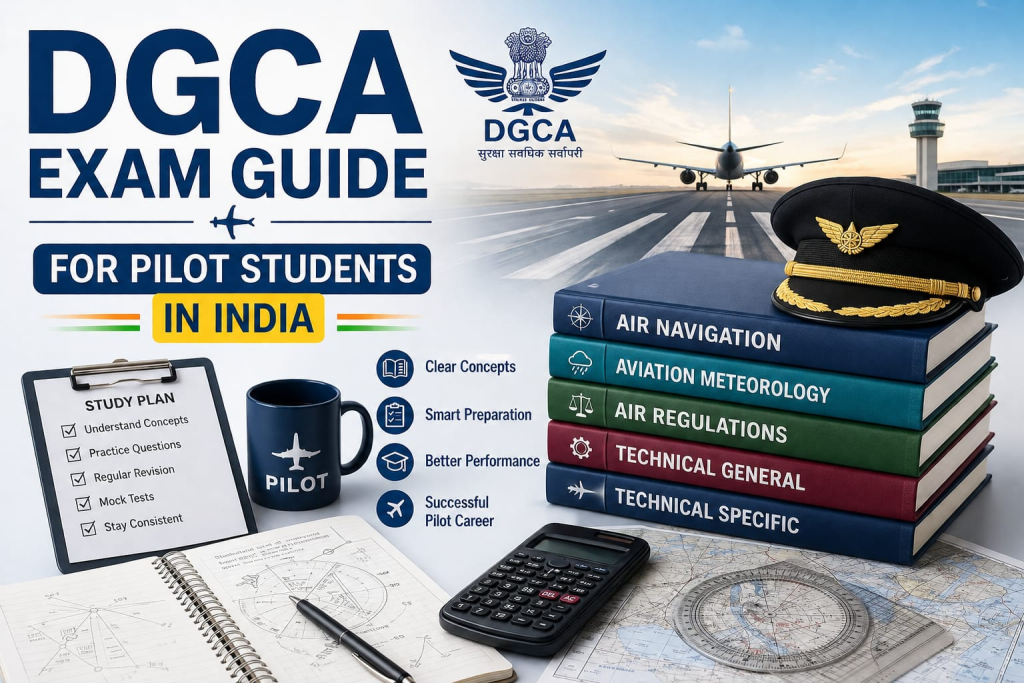
Subjects may include Air Navigation, Aviation Meteorology, Air Regulations, Technical General, and Technical Specific depending on the training requirement.
4. When should students start preparing for DGCA exams?
Students should begin preparation early during their pilot training journey to manage studies and flying activities effectively.
5. How can students balance flying and exam preparation?
Students can balance both by creating a structured schedule that includes flight practice, classes, revision, and self-study.
6. Are DGCA exams difficult for beginners?
DGCA exams require dedicated preparation, but students can improve their chances by understanding concepts and practicing regularly.
7. What study methods help in DGCA exam preparation?
Concept-based learning, regular revision, practice questions, and instructor guidance are effective preparation methods.
8. Can students prepare for DGCA exams without aviation experience?
Students can begin learning aviation subjects as beginners, but proper training and guidance help them understand concepts better.
9. How does DGCA exam knowledge help pilots?
The knowledge gained helps pilots understand aircraft operations, safety procedures, regulations, and flight decision-making.
10. Do DGCA exam requirements vary for different pilot licenses?
Yes, examination requirements may differ depending on the type of pilot license and applicable aviation guidelines.
Conclusion
DGCA exams are an important milestone for pilot students in India because they develop the theoretical foundation required for safe and professional flying. While practical flight training teaches aircraft handling skills, DGCA subjects help students understand the science, rules, and procedures behind aviation.
Success in DGCA examinations requires proper planning, consistent preparation, and a clear understanding of aviation concepts. Students who approach their studies with discipline and curiosity can build stronger foundations for their future careers as pilots.
A combination of theoretical knowledge, practical flying experience, and continuous learning helps aspiring pilots move confidently toward their aviation goals.

