
Introduction
Becoming a pilot is one of the most exciting and respected career paths in aviation. However, before starting this journey, understanding the pilot training age in India is extremely important. Age plays a key role because aviation training is structured in stages, and each stage has a minimum eligibility requirement set by regulatory authorities.
For aspiring pilots, knowing the right time to start preparation helps in planning education, finances, and medical fitness requirements. Many students begin exploring aviation careers during school, while others discover it later in college or even after graduation.
This blog explains the complete pilot eligibility age India, step-by-step licensing requirements, and practical guidance for future aviators. Whether you want to become a commercial airline pilot or a private flyer, this guide will help you understand the correct timeline.
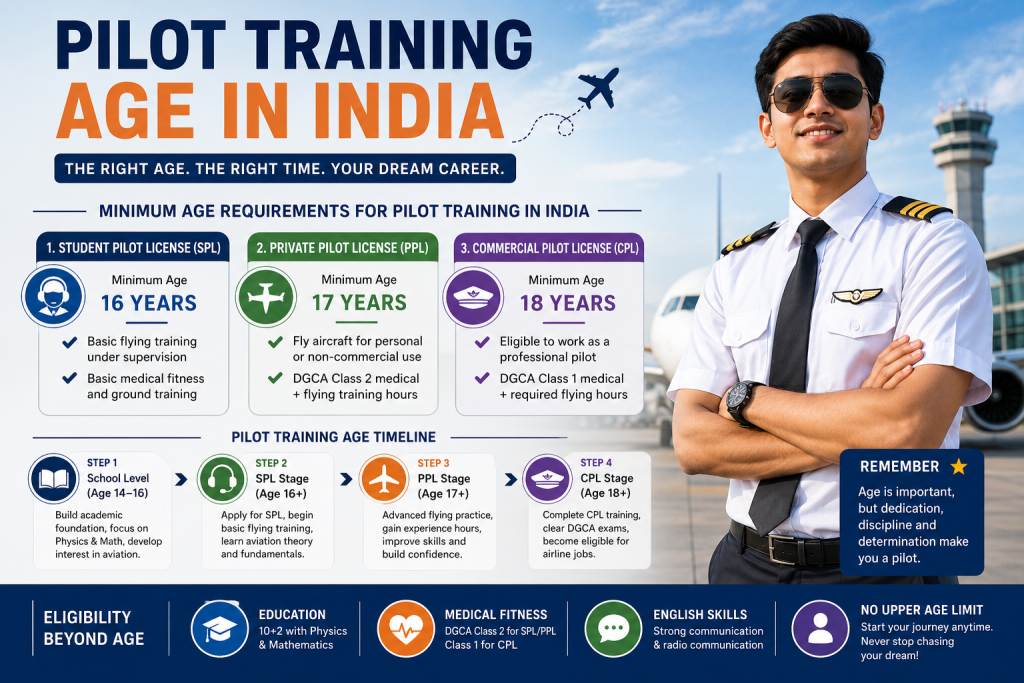
Minimum Age Requirements for Pilot Training in India
Pilot training in India is regulated and structured under different license levels. Each license has a specific minimum age requirement.
1. Student Pilot License (SPL)
The Student Pilot License is the first step toward becoming a pilot.
- Minimum age: 16 years
- Purpose: Allows basic flying training under supervision
- Requirement: Basic medical fitness and ground training knowledge
At this stage, students are introduced to aviation fundamentals such as aircraft basics, air regulations, and communication skills.
2. Private Pilot License (PPL)
The Private Pilot License allows you to fly aircraft privately, but not for commercial purposes.
- Minimum age: 17 years
- Purpose: Fly aircraft for personal or non-commercial use
- Requirement: DGCA Class 2 medical certificate + flying training hours
This stage builds strong foundational flying skills and prepares students for advanced commercial training.
3. Commercial Pilot License (CPL)
The Commercial Pilot License is the most important step for becoming an airline pilot.
- Minimum age: 18 years
- Purpose: Eligible to work as a professional pilot
- Requirement: DGCA Class 1 medical certificate + required flying hours
After completing CPL training, candidates can apply for airline jobs or further type-rating training.
Pilot Training Age Timeline in India
Understanding the timeline helps students plan their aviation career effectively.
Step 1: School Level (Age 14–16)
- Start focusing on Physics and Mathematics
- Build English communication skills
- Begin aviation awareness and research
- Prepare for SPL eligibility at 16
At this stage, students should develop interest and basic academic strength required for aviation studies.
Step 2: Student Pilot License Stage (Age 16+)
- Apply for SPL
- Begin basic flying training
- Learn aviation theory and cockpit fundamentals
- Understand air navigation and meteorology basics
This is the first real step into the cockpit environment.
Step 3: Private Pilot License Stage (Age 17+)
- Start advanced flying practice
- Gain flying experience hours
- Improve decision-making and aircraft handling skills
- Build confidence as a pilot
PPL training strengthens your core aviation foundation.
Step 4: Commercial Pilot License Stage (Age 18+)
- Complete full CPL training
- Accumulate required flying hours
- Clear DGCA examinations
- Become eligible for airline recruitment
This is the final and most important stage in professional pilot training.
Eligibility Beyond Age Requirements
While age is important, it is not the only requirement for becoming a pilot in India. Several other factors play a major role.
1. Educational Qualification
- Minimum requirement: 10+2 education
- Mandatory subjects: Physics and Mathematics
- Strong English communication skills recommended
Students without Physics and Mathematics may need to complete additional qualification requirements.
2. Medical Fitness Requirements
A pilot must meet strict medical standards.
- DGCA Class 2 Medical: Required for SPL and PPL
- DGCA Class 1 Medical: Required for CPL
- Good eyesight (correctable vision allowed in most cases)
- Overall physical and mental fitness
Medical fitness is as important as academic qualification in aviation.
3. English Language Proficiency
- English is the global aviation communication language
- Candidates must be able to read, write, and speak clearly
- Radio communication training is part of CPL preparation
Common Myths About Pilot Age Requirements
Many students hesitate due to misinformation about age limits. Let’s clear some common myths.
Myth 1: You must start pilot training at a very young age
Reality: You can start CPL training at 18 or later. Even late starters can become pilots if they meet requirements.
Myth 2: Older candidates cannot become pilots
Reality: There is no strict upper age limit to start training. However, airline hiring depends on retirement and health standards.
Myth 3: If you miss SPL age, you cannot become a pilot
Reality: SPL is just the beginning. You can still pursue aviation even if you start later.
Myth 4: Only science students can become pilots
Reality: While Physics and Mathematics are required, students from other streams can also qualify through additional study.
Practical Advice for Future Pilots
If you are serious about becoming a pilot, planning early is very important.
Best Age to Start Preparation
- Ideal starting age: 14–16 years
- SPL eligibility age: 16 years
- CPL eligibility age: 18 years
Starting early helps you build strong academic and financial preparation.
When to Join Flying School
- After completing 10+2 with Physics and Mathematics
- Or while completing eligibility requirements simultaneously
- After passing DGCA medical tests
Financial Planning Tips
Pilot training is expensive, so planning is essential:
- Explore education loans early
- Research multiple flying schools
- Plan training in stages (SPL → PPL → CPL)
Skill Development Tips
- Improve English fluency
- Practice basic math and physics concepts
- Build discipline and time management
- Stay physically fit
Why Understanding Pilot Training Age in India is Important
Understanding the correct pilot training age in India helps students:
- Avoid delays in career planning
- Choose the right training stage
- Prepare academically and financially
- Meet DGCA requirements without confusion
Proper planning ensures a smooth journey from student to professional pilot.
Frequently Asked Questions (FAQs)
1. What is the minimum age to become a pilot in India?
The minimum age to begin pilot training is 16 years for a Student Pilot License (SPL). This is the first step in aviation training.
2. Can I become a pilot after 30?
Yes, you can start pilot training after 30. There is no strict upper age limit, but medical fitness and airline hiring requirements must be met.
3. What is the CPL age requirement in India?
The minimum age for a Commercial Pilot License (CPL) in India is 18 years.
4. Is there any maximum age limit for pilot training?
There is no fixed maximum age for training, but airline employment and retirement policies may affect job opportunities.
5. Can I start pilot training after 12th?
Yes, you can start CPL training after completing 10+2 with Physics and Mathematics, provided you meet age and medical requirements.
6. Do I need Physics and Maths for pilot training?
Yes, Physics and Mathematics at 10+2 level are mandatory for CPL eligibility in India.
7. What medical test is required for pilots?
DGCA Class 2 medical is required for SPL/PPL and Class 1 medical is required for CPL.
8. Is 16 years too early to start pilot training?
No, 16 is the correct minimum age to start as a Student Pilot under SPL.
Conclusion
The journey to becoming a pilot is structured, disciplined, and highly rewarding. Understanding the pilot eligibility age India is the first step toward planning a successful aviation career. From SPL at 16 years to CPL at 18 years, each stage is designed to build strong flying skills and confidence.
Age is important, but it is only one part of the journey. Education, medical fitness, and dedication play an equally vital role. Whether you start early or later, consistent preparation and passion for aviation can help you achieve your dream of flying.

