
Introduction
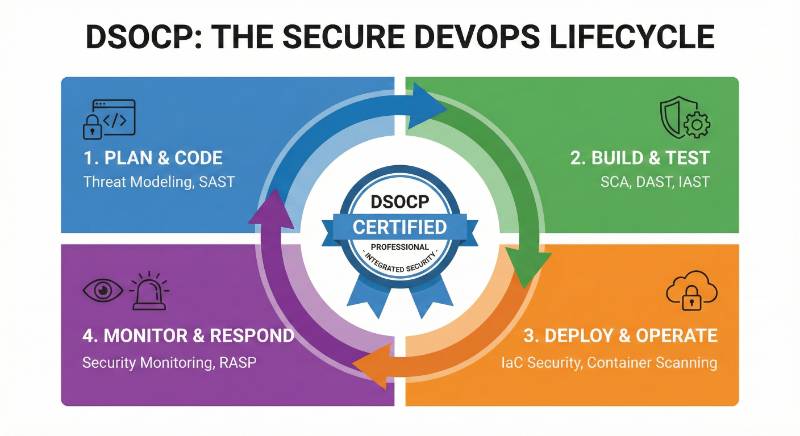
The DevSecOps Certified Professional (DSOCP) certification is essential for professionals who want to integrate security throughout the entire DevOps lifecycle. As software development and IT operations become more intertwined, it’s critical that security is woven into the fabric of DevOps from the start. With the rise of cyber threats and the increasing complexity of IT systems, security must not be an afterthought.
This guide will provide all the details you need about the DSOCP certification, including who should take it, the skills you’ll gain, real-world projects you can tackle after completing it, and how to prepare for the certification exam. Whether you’re an engineer or a manager, the DSOCP certification will help you develop the expertise needed to ensure secure software delivery in modern DevOps environments.
What is DevSecOps Certified Professional (DSOCP)?
The DevSecOps Certified Professional (DSOCP) certification is a globally recognized qualification that focuses on integrating security into the DevOps pipeline. DevSecOps, a combination of DevOps and security, ensures that security is an integral part of every stage of software development, from planning through development to deployment and operations. This certification helps you understand how to automate security tasks, manage vulnerabilities, and ensure compliance within the fast-paced world of DevOps.
By completing the DSOCP certification, you demonstrate your ability to implement security practices and tools to create secure, resilient, and compliant DevOps environments.
Who Should Take the DSOCP Certification?
The DSOCP certification is ideal for the following professionals:
- DevOps Engineers who want to expand their knowledge by integrating security into their workflows.
- Security Engineers who want to specialize in DevSecOps and understand how to secure the DevOps pipeline.
- Cloud Engineers who need to ensure the security of cloud infrastructure and applications.
- Software Engineers who want to learn secure coding practices and how to integrate security into the development process.
- Engineering Managers who are responsible for leading teams in adopting secure DevOps practices.
- IT Professionals with a background in security or DevOps who want to further specialize in security integration.
Skills You’ll Gain
By completing the DSOCP certification, you’ll acquire the following skills:
- Secure Software Development: Learn secure coding practices and how to implement security at each phase of the software development lifecycle.
- Security Automation: Automate security testing and vulnerability management throughout the CI/CD pipeline.
- Security Tool Integration: Gain expertise in using tools such as Snyk, SonarQube, and OWASP ZAP for continuous security monitoring.
- Risk Management: Understand how to assess and mitigate security risks early in the development process.
- Compliance Management: Learn how to ensure DevOps processes comply with industry regulations such as GDPR, HIPAA, and PCI DSS.
- Incident Response: Develop the skills to quickly detect and respond to security incidents in a DevOps environment.
- Continuous Monitoring: Implement monitoring solutions to track vulnerabilities and compliance throughout the software lifecycle.
Real-World Projects You Should Be Able to Do After It
After completing the DSOCP certification, you will be able to work on real-world projects such as:
- Integrating security into CI/CD pipelines: Automate security testing during the build and deployment processes using tools like Jenkins and GitLab.
- Implementing automated security checks: Integrate vulnerability scanning tools into the DevOps pipeline to ensure secure software delivery.
- Creating secure cloud environments: Use security tools to create and manage secure cloud infrastructures on platforms like AWS, Azure, or GCP.
- Performing vulnerability assessments: Conduct vulnerability scans and fix security issues in applications and infrastructure.
- Securing containerized applications: Use tools like Docker and Kubernetes to ensure secure deployment and management of containerized apps.
- Ensuring compliance: Implement and manage security measures to meet industry standards and regulations, ensuring the development and deployment pipeline is compliant.
Preparation Plan
The DSOCP certification can be completed with effective planning and focused preparation. Below is a structured plan based on your experience level:
7-14 Days Preparation Plan (for professionals with prior experience)
- Day 1-7: Review DevOps principles, security best practices, and basic security automation tools.
- Day 8-14: Focus on integrating security into CI/CD pipelines, vulnerability scanning tools, and automated security testing practices.
30 Days Preparation Plan (for intermediate professionals)
- Day 1-7: Study secure coding practices, DevSecOps tools, and how to implement security in the development lifecycle.
- Day 8-14: Dive into security automation tools like Snyk, SonarQube, and OWASP ZAP.
- Day 15-30: Focus on implementing automated vulnerability management, compliance testing, and securing cloud platforms (AWS, Azure).
60 Days Preparation Plan (for beginners)
- Day 1-15: Learn the basics of DevOps, CI/CD, cloud platforms, and security concepts.
- Day 16-30: Study secure software development practices, DevSecOps tools, and CI/CD security integration.
- Day 31-45: Focus on cloud security, risk management, and compliance measures in DevOps environments.
- Day 46-60: Gain hands-on experience by setting up and securing CI/CD pipelines and cloud infrastructures with security tools.
Common Mistakes to Avoid
Here are some common mistakes to avoid while preparing for the DSOCP certification:
- Ignoring hands-on practice: DevSecOps is about applying security practices in real-world scenarios. Avoid relying solely on theoretical knowledge.
- Focusing too much on tools: While tools like Snyk and SonarQube are essential, it’s equally important to understand the principles of secure software development and security integration.
- Neglecting security compliance: Security in DevSecOps isn’t just about scanning for vulnerabilities; it’s also about ensuring compliance with industry regulations.
- Overcomplicating security automation: Keep the automation process simple and practical, focusing on key security elements that are essential for your workflow.
Best Next Certification After DSOCP
After completing the DSOCP certification, consider the following certifications for further career advancement:
- Certified Kubernetes Security Specialist (CKS): Deepen your expertise in securing containerized applications and Kubernetes clusters.
- Certified Cloud Security Professional (CCSP): Focus on cloud security practices and learn how to secure cloud infrastructure.
- AWS Certified Security Specialty: Specialize in security practices for AWS environments, including securing infrastructure and applications.
Choose Your Path: DevOps Learning Paths
After completing the DevSecOps Certified Professional (DSOCP) certification, you can specialize further with one of these learning paths:
DevOps
Master the DevOps lifecycle including CI/CD, cloud infrastructure, automation, and configuration management to streamline software delivery.
DevSecOps
Focus on integrating security into DevOps, automating security testing, vulnerability management, and ensuring compliance throughout the development lifecycle.
Site Reliability Engineering (SRE)
Enhance system reliability, availability, and scalability by managing large-scale systems, automating operations, and improving performance.
AIOps/MLOps
Combine AI and ML with DevOps for smarter automation, predictive analytics, and enhanced operational decision-making.
DataOps
Optimize and automate data pipelines, ensuring efficient real-time data processing and collaboration between data engineers and DevOps teams.
FinOps
Manage cloud financial operations, optimizing cloud costs, resource allocation, and ensuring financial transparency in the DevOps pipeline.
Role → Recommended Certifications
| Role | Recommended Certifications |
|---|---|
| DevOps Engineer | DSOCP, Certified Kubernetes Administrator (CKA), AWS Certified DevOps Engineer |
| SRE (Site Reliability Engineer) | DSOCP, Google Cloud Professional Cloud Architect, SRE Certification |
| Platform Engineer | DSOCP, AWS Solutions Architect, HashiCorp Certified Terraform Associate |
| Cloud Engineer | DSOCP, AWS Certified DevOps Engineer, Google Cloud Professional Cloud Architect |
| Security Engineer | DSOCP, CISSP (Certified Information Systems Security Professional) |
| Data Engineer | DSOCP, Microsoft Azure Data Engineer Associate |
| FinOps Practitioner | DSOCP, Certified FinOps Practitioner |
| Engineering Manager | DSOCP, Leadership in DevOps, Certified ScrumMaster (CSM) |
Top Institutions Offering DSOCP Training and Certification
- DevOpsSchool:
Offers expert-led training with hands-on labs, covering everything from secure coding practices to automating security in CI/CD pipelines. - Cotocus:
Provides practical training in DevSecOps with real-time case studies, focusing on security integration within the DevOps pipeline. - Scmgalaxy:
Specializes in DevSecOps training, ensuring learners are equipped to secure software development practices and pipeline automation. - BestDevOps:
Offers training that covers all aspects of DevSecOps, from secure coding to integrating security tools in DevOps workflows. - devsecopsschool.com:
Dedicated to providing in-depth DevSecOps training, focusing on security in the DevOps lifecycle. - sreschool.com:
Offers training for Site Reliability Engineers with a focus on securing high-availability systems and managing production environments. - aiopsschool.com:
Focuses on integrating artificial intelligence with DevOps practices to enhance security and automation. - dataopsschool.com:
Provides training for DataOps, ensuring secure and efficient management of data workflows in DevOps environments. - finopsschool.com:
Offers specialized training in financial operations (FinOps) for cloud environments, focusing on cost optimization and security.
General FAQs about DevSecOps
- What is the difference between DevOps and DevSecOps?
DevOps focuses on automating the software development lifecycle, while DevSecOps integrates security into every part of that process, ensuring that security vulnerabilities are identified and addressed continuously. - How do DevOps and DevSecOps complement each other?
DevSecOps builds upon DevOps by adding security practices at every stage of development, from planning to production. It ensures that automated testing, continuous integration, and delivery do not compromise security
. - How do you ensure continuous security in a DevOps pipeline?
Continuous security can be ensured by integrating security tools like Snyk, SonarQube, and OWASP ZAP into the CI/CD pipeline, automating vulnerability scanning, and ensuring that security is part of the development, testing, and deployment processes. - Can DevSecOps be applied to existing DevOps workflows?
Yes, DevSecOps can be integrated into existing DevOps workflows by gradually adding security practices, such as automated testing for vulnerabilities, securing infrastructure as code, and ensuring compliance within CI/CD pipelines. - What role does automation play in DevSecOps?
Automation is central to DevSecOps, as it enables the integration of security checks and tests in the CI/CD pipeline, reducing manual errors, and ensuring consistent, repeatable security processes. - What are some common DevSecOps tools?
Common DevSecOps tools include SonarQube (for static code analysis), Snyk (for vulnerability management), OWASP ZAP (for dynamic application security testing), and Checkmarx (for secure code scanning). - How can you address security risks during rapid deployments?
With DevSecOps, security risks are addressed through automated security testing, vulnerability scans, and real-time monitoring, ensuring that security checks are made as part of every deployment. - What is the role of the security team in DevSecOps?
In DevSecOps, the security team collaborates closely with development and operations teams, ensuring that security is incorporated early in the development lifecycle and is continuously managed through automation. - What challenges do organizations face when implementing DevSecOps?
Key challenges include cultural resistance to change, the complexity of integrating security tools into existing workflows, and the need for specialized skills in both security and DevOps. - What industries benefit the most from DevSecOps?
Industries such as finance, healthcare, and government, where data security, compliance, and risk management are critical, benefit the most from DevSecOps due to the increasing regulatory and security requirements. - How can DevSecOps help with regulatory compliance?
DevSecOps ensures that security controls are built into every stage of the development process, making it easier to meet industry regulations like GDPR, HIPAA, and PCI DSS by automating compliance checks and maintaining continuous monitoring. - What is the main goal of DevSecOps?
The main goal of DevSecOps is to embed security into every phase of the development and deployment process, ensuring that security is prioritized and continuously maintained as part of the DevOps lifecycle.
FAQs Specific to DevSecOps Certified Professional (DSOCP)
- What is the focus of the DevSecOps Certified Professional (DSOCP) certification?
The DSOCP certification focuses on integrating security into the DevOps lifecycle. It covers topics such as security automation, vulnerability management, secure coding practices, and ensuring compliance within DevOps workflows. - How will the DSOCP certification benefit my career?
The DSOCP certification will make you a sought-after professional in the growing field of DevSecOps, helping you secure roles in DevSecOps, security engineering, and cloud security. It demonstrates your ability to manage security in DevOps pipelines effectively. - What is the format of the DSOCP certification exam?
The DSOCP exam consists of multiple-choice questions and practical tasks that test your understanding of integrating security tools into DevOps workflows, automating security, and managing vulnerabilities in the CI/CD pipeline. - What skills are tested in the DSOCP exam?
The DSOCP exam tests your skills in security automation, vulnerability management, CI/CD pipeline security integration, compliance management, and secure coding practices. - How long does it take to prepare for the DSOCP certification?
Depending on your background, preparation for the DSOCP certification can take anywhere from 7–60 days. For those with prior DevOps or security experience, preparation may take 7–14 days, while beginners might need more time. - Is there a prerequisite for taking the DSOCP exam?
While there are no strict prerequisites, familiarity with basic DevOps principles, cloud technologies, and security practices is recommended to get the most out of the DSOCP certification. - How difficult is the DSOCP exam?
The exam is moderately challenging, requiring both theoretical understanding and practical experience in implementing security in DevOps pipelines. Hands-on experience with tools like SonarQube, Snyk, and OWASP ZAP will be beneficial. - What real-world experience should I have before taking the DSOCP exam?
You should be comfortable working with DevOps tools (Jenkins, GitLab, Docker, Kubernetes), security tools (Snyk, SonarQube, Checkmarx), and have knowledge of CI/CD pipelines and vulnerability management practices in a cloud environment.
Conclusion
The DevSecOps Certified Professional (DSOCP) certification is an excellent way to specialize in integrating security practices into the DevOps lifecycle. As organizations continue to prioritize security, the need for skilled professionals in DevSecOps is growing rapidly. Earning the DSOCP certification will not only enhance your technical skills but also improve your career prospects by opening doors to high-paying roles in security, DevOps, and cloud engineering.
With the right preparation, hands-on experience, and commitment to continuous learning, the DSOCP certification can be a transformative step in advancing your career in today’s ever-evolving technology landscape.

