
Introduction
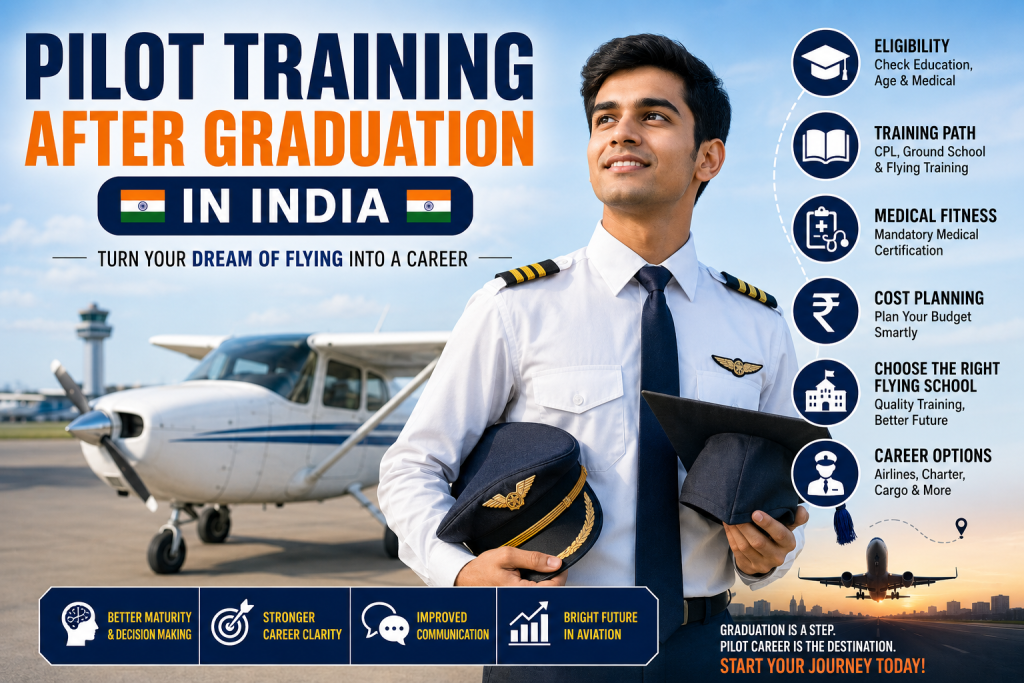
Many students in India dream of becoming pilots, but they often assume that aviation careers must begin immediately after school. In reality, pilot training after graduation is a very common and practical pathway. Graduation provides maturity, better decision-making ability, and time to plan financially for one of the most structured and rewarding careers in aviation.
India’s aviation sector is growing rapidly, with increasing demand for commercial pilots, cargo pilots, and flight instructors. This makes graduation an ideal stage to begin pilot training. This guide explains the complete process of becoming a pilot after graduation in India in a simple and structured way.
Why Choose Pilot Training After Graduation?
Choosing aviation after graduation has several advantages for students who are serious about building a pilot career.
Career Clarity
Graduation helps students understand their long-term interests better. At this stage, many students choose aviation as a focused career path rather than a rushed decision after school.
Better Financial Planning
Pilot training requires significant investment. After graduation, students and families are often better prepared financially or can explore loans and sponsorship options.
Improved Decision-Making
Maturity plays an important role in aviation training because the profession demands discipline, responsibility, and long-term commitment.
Strong Career Growth Potential
Aviation offers global opportunities, and starting after graduation still provides enough time to build a successful airline career.
Eligibility for Pilot Training After Graduation
Before starting training, students must meet certain eligibility criteria set by aviation authorities.
Educational Requirements
- Graduation in any discipline is acceptable in most cases
- Science background (Physics and Mathematics) is preferred but not always mandatory
- Strong English communication skills are required
Age Requirements
- Students must meet minimum age criteria for aviation licenses
- There is no upper age limit for starting training in most cases
- Earlier start after graduation is beneficial for career progression
Medical Requirements
Medical fitness is one of the most important eligibility factors.
- DGCA Class 2 Medical for initial training
- DGCA Class 1 Medical for Commercial Pilot License
- Good vision and hearing standards required
- Overall physical and mental fitness is necessary
Language Requirements
- English is the standard language in aviation
- Pilots must communicate clearly with air traffic control
- Reading and understanding aviation manuals is essential
Step-by-Step Guide to Become a Pilot After Graduation
Becoming a pilot involves a structured training path.
Step 1: Medical Fitness Check
Start with DGCA-approved medical examinations to ensure eligibility.
Step 2: Choose a Flying School
Select a DGCA-approved flying school based on:
- Safety standards
- Instructor quality
- Aircraft availability
- Training cost transparency
Step 3: Ground School Training
Learn aviation theory including:
- Air navigation
- Meteorology
- Air regulations
- Aircraft systems
Step 4: Student Pilot License (SPL)
This is the first official step in pilot training, allowing supervised flying.
Step 5: Flight Training
Students begin practical flying lessons with instructors and build flight hours.
Step 6: Private Pilot License (PPL)
PPL allows students to fly aircraft for private or recreational purposes.
Step 7: Commercial Pilot License (CPL)
CPL is the professional license required to work as a paid pilot.
Step 8: Type Rating
Special training on specific aircraft types used by airlines.
Step 9: Airline Selection
After completing training, students apply for airline jobs based on performance and experience.
Pilot Training Path After Graduation
The structured pathway looks like this:
Graduation → SPL → PPL → CPL → Type Rating → Airline Career
Each stage builds knowledge, flying skills, and professional readiness.
Types of Pilot Careers After Graduation
Graduates can explore multiple aviation career paths.
Airline Pilot
Fly commercial passenger aircraft for domestic and international airlines.
Cargo Pilot
Operate aircraft carrying goods, logistics, and freight shipments.
Charter Pilot
Fly private aircraft for business or luxury travel services.
Flight Instructor
Train new student pilots in flying schools.
Corporate Pilot
Fly aircraft for private companies and business executives.
Pilot Training Cost After Graduation
Pilot training involves multiple cost components.
Flight Training
Includes aircraft rental, instructor fees, and fuel charges.
Ground School
Theoretical training covering aviation subjects.
Medical Expenses
DGCA medical examinations and renewals.
Simulator Training
Advanced training for instrument flying and emergencies.
Exam Fees
Licensing and examination-related charges.
Accommodation and Living Costs
Hostel, food, and travel expenses near flying schools.
Hidden Costs
- Extra flying hours
- Re-training sessions
- Landing fees
- Equipment and study materials
Proper financial planning is essential before starting training.
How to Choose the Right Flying School
Selecting the right flying school is a critical decision.
Important factors include:
- DGCA approval status
- Experienced instructors
- Aircraft fleet condition
- Safety records
- Transparent fee structure
- Student reviews and success rate
A good flying school significantly improves training quality and career outcomes.
Skills Required to Become a Pilot
Apart from technical training, pilots need strong personal skills.
- Decision-making ability
- Situational awareness
- Discipline and responsibility
- Strong communication skills
- Stress management
- Technical understanding
These skills help pilots handle real-world flying conditions safely.
Challenges of Pilot Training After Graduation
Pilot training is rewarding but challenging.
- High training costs
- Competitive airline selection process
- Strict medical requirements
- Long training duration
- Continuous skill development required
Students must be mentally and financially prepared for these challenges.
Advantages of Starting Pilot Training After Graduation
There are many benefits to choosing aviation after graduation:
- Better career clarity
- Financial readiness
- Mature decision-making
- Strong focus on long-term goals
- Global job opportunities
Graduation is often the ideal stage to begin structured pilot training.
Future Scope of Aviation in India
India’s aviation industry is expanding rapidly.
- Increasing number of airlines
- Growing passenger traffic
- New airport development
- Rising cargo demand
- Strong global pilot demand
This growth ensures strong career opportunities for new pilots.
How PilotsIndia.com Helps Students
PilotsIndia.com supports aviation aspirants by providing:
- Clear pilot training guidance
- Step-by-step career roadmaps
- Flying school selection information
- License explanation for beginners
- Aviation career awareness content
It helps students make informed decisions before entering aviation training.
Frequently Asked Questions
1- Can I become a pilot after graduation in India?
Yes, graduates can join pilot training and pursue a commercial pilot career if they meet eligibility criteria.
2- What is the eligibility for pilot training?
Students need graduation, medical fitness, English skills, and aviation training approval.
3- How long does pilot training take?
It usually takes 18 months to 3 years depending on training progress and flying hours.
4- Is graduation necessary for CPL?
Graduation is not always mandatory, but it is highly preferred and beneficial.
5- What subjects are required for pilot training?
Physics and Mathematics are helpful but not always compulsory.
6- How much does pilot training cost in India?
Cost varies depending on flying school, aircraft usage, and training duration.
7- Can non-science students become pilots?
Yes, non-science students can also become pilots with proper training.
8- What is DGCA medical requirement?
DGCA requires Class 2 and Class 1 medical fitness for pilot training.
9- What is the career scope after CPL?
Graduates can become airline pilots, cargo pilots, instructors, or charter pilots.
10- Is aviation a good career after graduation?
Yes, aviation offers strong global career opportunities and long-term growth.
Conclusion
Pilot training after graduation in India is a structured and rewarding career path for students who dream of flying. Graduation provides the right foundation for planning, financial preparation, and career clarity. With proper medical fitness, training, and dedication, students can move step by step from SPL to CPL and eventually build a successful aviation career. As India’s aviation industry continues to grow, opportunities for trained pilots are also increasing, making this an excellent time to enter the field.

