
Introduction
A pilot career is one of the most respected and exciting career options for Indian students who dream of flying, traveling, and working in the aviation industry. With the growth of airlines, airports, cargo services, charter aviation, and flight training organizations, aviation is becoming a strong career path for focused and disciplined students. Becoming a pilot requires proper planning, medical fitness, quality training, financial preparation, and continuous learning. This guide explains the complete pilot career journey in simple language so students and parents can understand eligibility, licenses, training stages, costs, career options, and challenges before making a decision.
Why Choose a Pilot Career?
A pilot career offers a unique combination of responsibility, adventure, professionalism, and personal growth. It is not a regular desk job. Pilots work in a highly disciplined environment where safety, decision-making, communication, and technical knowledge are very important.
Students choose a pilot career because it offers:
- Exciting and professional work environment
- Opportunity to travel
- Strong career growth potential
- Respectable aviation profession
- Technical and practical learning
- Global career possibilities
- Challenging but rewarding work life
- Chance to work with airlines, cargo companies, and charter operators
For students who love aircraft, technology, discipline, and travel, aviation can be a meaningful career option.
Types of Pilot Careers
Pilot careers are not limited to airline flying only. Students can choose different aviation paths depending on their training, license, experience, and career goals.
Airline Pilot
An airline pilot flies passenger aircraft for domestic or international airlines. This is one of the most popular career goals for aviation students. Airline pilots follow strict safety procedures, operate advanced aircraft, communicate with air traffic control, and ensure passenger safety.
Commercial Pilot
A commercial pilot is licensed to fly aircraft for paid work. Commercial pilots may work in airlines, charter aviation, cargo operations, aerial survey, medical evacuation, or business aviation. A Commercial Pilot License is an important requirement for professional flying jobs.
Cargo Pilot
Cargo pilots fly aircraft that carry goods, packages, industrial material, medical supplies, and other cargo. Cargo aviation is important for logistics, e-commerce, emergency supplies, and global trade.
Charter Pilot
Charter pilots fly private or rented aircraft for individuals, companies, tourists, and business travelers. This career can offer flexible flying opportunities and exposure to different routes and aircraft types.
Flight Instructor
Flight instructors train student pilots at flying schools. This role is suitable for pilots who enjoy teaching and helping new aviation students build flying skills.
Corporate Pilot
Corporate pilots fly aircraft owned or hired by companies and business groups. They may operate business jets or smaller aircraft for executive travel and company operations.
Eligibility Requirements for Indian Students
Before starting pilot training, students should understand basic eligibility requirements. These requirements may vary depending on license type and aviation authority rules, so students should always confirm updated requirements with an approved flying school.
Educational Qualifications
Students generally need to complete school education with the required academic background for pilot training. Mathematics and Physics are important subjects for aviation learning because pilots use basic technical knowledge, navigation, weather understanding, and aircraft performance concepts.
Students from non-science backgrounds should check whether they need additional subject qualifications before applying.
Age Requirements
Pilot training has minimum age requirements depending on the type of license. Students should check the latest age rules before applying for Student Pilot License, Private Pilot License, or Commercial Pilot License.
English Language Skills
English is important in aviation because pilots communicate with air traffic control, read manuals, understand safety instructions, and follow international aviation procedures. Students should work on clear speaking, listening, and aviation communication skills.
Medical Fitness Requirements
Medical fitness is mandatory for pilots. Students must pass aviation medical examinations to confirm they are physically and mentally fit for flying. Vision, hearing, general health, and decision-making fitness are important for safe aircraft operation.
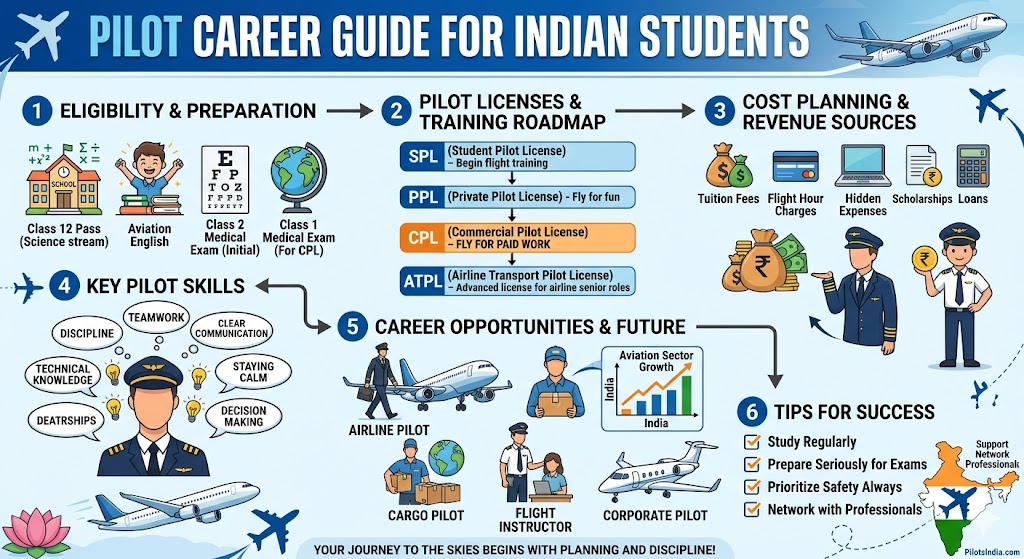
Step-by-Step Roadmap to Become a Pilot in India
Becoming a pilot requires step-by-step preparation. Students should not rush the process. A clear roadmap helps avoid confusion and financial mistakes.
Step 1: Complete School Education
The first step is completing school education with the required subjects. Students interested in aviation should focus on Mathematics, Physics, English, and general awareness. Good academic preparation helps during ground school and licensing exams.
Step 2: Obtain Medical Certification
Before investing heavily in pilot training, students should complete the required aviation medical examination. This helps confirm whether they meet pilot fitness standards. Medical certification should be done early to avoid future disappointment.
Step 3: Join an Approved Flying School
Students should choose a flying school carefully. A good flying school should have proper approval, qualified instructors, maintained aircraft, transparent fees, strong safety culture, and good student support.
Step 4: Obtain Student Pilot License
A Student Pilot License is usually the first license that allows students to begin formal flight training. It introduces students to basic aviation rules, safety practices, and training discipline.
Step 5: Complete Flight Training
Flight training includes practical flying lessons with instructors, solo flying when approved, navigation exercises, emergency procedures, takeoff and landing practice, and aircraft handling. Students also complete ground school subjects alongside flying.
Step 6: Obtain Commercial Pilot License
A Commercial Pilot License allows a pilot to fly professionally. Students must complete required flight training, exams, medical requirements, and licensing procedures to obtain this license.
Step 7: Build Flight Experience
After getting a Commercial Pilot License, pilots may need to build experience, improve skills, complete additional training, and prepare for job opportunities. Some pilots work as instructors, charter pilots, or in other aviation roles before entering airlines.
Step 8: Apply for Airline Opportunities
Once eligible, pilots can apply for airline recruitment. Airline selection may include written tests, simulator checks, interviews, group discussions, medical checks, and background verification. Strong preparation and confidence are important.
Understanding Pilot Licenses
Pilot licenses define what kind of flying a person is allowed to do. Beginners should understand the basic license types.
Student Pilot License
A Student Pilot License allows an aviation student to begin formal flying training under approved rules. It is the starting point for many aspiring pilots.
Private Pilot License
A Private Pilot License allows pilots to fly for personal or non-commercial purposes. It is useful for aviation enthusiasts and people who want to fly privately.
Commercial Pilot License
A Commercial Pilot License allows pilots to work professionally and earn money through flying. This is the main license required for professional pilot careers.
Airline Transport Pilot License
An Airline Transport Pilot License is an advanced license required for senior airline pilot roles. It is usually pursued after gaining significant flying experience.
Pilot Training Costs in India
Pilot training involves several cost categories. Students and parents should understand the full financial picture before starting.
Common cost areas include:
- Flying school fees
- Flight hour charges
- Ground school fees
- Medical examination expenses
- Examination fees
- Study materials
- Uniform and equipment
- Accommodation and food
- Travel expenses
- License processing charges
- Extra flying hours if required
Students should always ask for a complete fee breakdown from the flying school. Choosing the cheapest option without checking training quality can lead to delays and extra costs later.
How to Choose the Right Flying School
Choosing the right flying school is one of the most important decisions in a pilot career journey. A school should be selected based on quality, safety, transparency, and student support.
Check these points before enrolling:
- Approval status of the flying school
- Aircraft availability
- Aircraft maintenance standards
- Instructor qualifications
- Student-to-instructor ratio
- Ground school quality
- Safety record
- Fee transparency
- Training schedule
- Student reviews
- License completion support
- Career guidance
Students should visit the campus, speak to current students, and compare multiple schools before making a final decision.
Skills Required to Become a Successful Pilot
A successful pilot needs more than flying ability. Aviation requires discipline, patience, technical understanding, and responsibility.
Important skills include:
- Discipline
- Clear communication
- Quick decision-making
- Leadership
- Teamwork
- Technical understanding
- Situational awareness
- Stress management
- Time management
- Problem-solving
- Attention to detail
- Continuous learning attitude
Students should start building these skills early during school and training.
Career Opportunities After Pilot Training
After pilot training, students can explore different aviation career opportunities depending on license, experience, and market demand.
Career options include:
- Domestic airlines
- International airlines
- Cargo operators
- Charter companies
- Corporate aviation
- Flight training organizations
- Medical evacuation services
- Aerial survey operations
- Aviation management support roles
- Flight operations departments
Aviation careers may require patience because hiring cycles can change. Students should keep improving skills and stay updated with industry requirements.
Challenges of a Pilot Career
A pilot career is rewarding, but it also comes with challenges. Students should understand these challenges before starting.
Common challenges include:
- High training investment
- Strict medical standards
- Competitive job market
- Continuous exams and training
- Irregular work schedules
- High responsibility for safety
- Need for constant skill improvement
- Weather and operational pressure
Students can overcome these challenges with planning, discipline, financial preparation, and the right guidance.
Future of Pilot Careers in India
India’s aviation sector continues to offer strong long-term possibilities because of growing air travel demand, expanding airports, regional connectivity, cargo growth, and airline fleet expansion. More people are choosing air travel for business, education, tourism, and personal needs.
Future aviation growth may create opportunities in:
- Airline operations
- Pilot training
- Regional aviation
- Cargo services
- Airport operations
- Aircraft maintenance
- Aviation technology
- Flight safety roles
Students who begin preparation early and choose quality training can build a strong aviation career path.
How PilotsIndia.com Helps Aspiring Pilots
PilotsIndia.com can support Indian students by providing clear aviation career guidance, pilot training information, flying school selection tips, licensing awareness, and industry updates. For students and parents, reliable information is very important because pilot training requires major decisions.
PilotsIndia.com can help with:
- Pilot career guidance
- Training roadmap information
- Flying school research support
- License explanation
- Cost planning guidance
- Aviation career resources
- Beginner-friendly pilot education
Common Mistakes Students Make
Many students start pilot training with excitement but without proper research. Avoiding common mistakes can save time, money, and stress.
Common mistakes include:
- Delaying medical checks
- Choosing a flying school only based on low cost
- Not understanding license requirements
- Ignoring hidden training expenses
- Poor financial planning
- Not improving English communication
- Not preparing seriously for ground school exams
- Ignoring instructor quality
- Not checking aircraft availability
- Depending only on advertisements
A careful and informed approach helps students make better decisions.
Frequently Asked Questions
1- How do I become a pilot in India?
To become a pilot in India, students should complete required education, pass aviation medical checks, join an approved flying school, obtain the required pilot licenses, complete flight training, and apply for professional flying opportunities.
2- What qualifications are required to become a pilot?
Students generally need the required school education, English communication ability, medical fitness, and subject eligibility depending on the license type. Mathematics and Physics are commonly important for pilot training.
3- How long does pilot training take?
Pilot training duration depends on flying school efficiency, weather, aircraft availability, exam schedules, student performance, and licensing process. Students should ask schools about average completion timelines before enrolling.
4- What is a Commercial Pilot License?
A Commercial Pilot License is a professional pilot license that allows a pilot to fly aircraft for paid work. It is an important requirement for students who want to work as professional pilots.
5- Is pilot training expensive?
Pilot training requires a significant investment because it includes aircraft flying hours, instructors, fuel, ground school, exams, medicals, and living expenses. Students should plan finances carefully before joining.
6- What medical tests are required for pilots?
Pilot medical tests usually include vision, hearing, general health, blood pressure, medical history, and fitness assessment. Exact requirements depend on aviation authority rules and license type.
7- Can girls become pilots in India?
Yes, girls can become pilots in India. Aviation careers are open to eligible candidates who meet educational, medical, training, and licensing requirements. Many women have built successful careers in aviation.
8- What are the career opportunities after CPL?
After a Commercial Pilot License, candidates may explore airline jobs, charter aviation, cargo flying, flight instruction, corporate aviation, and other professional flying roles depending on experience and market demand.
9- How much flying experience is needed?
Flying experience requirements depend on the license, aviation authority rules, and career goal. Students should confirm the latest flying hour requirements with an approved flying school.
10- Is aviation a good career choice in India?
Aviation can be a good career choice for disciplined, medically fit, focused, and passionate students. It requires investment, training, patience, and continuous learning, but it can offer strong professional growth.
Conclusion
A pilot career can be an exciting and rewarding path for Indian students, but it requires careful planning, discipline, financial preparation, and the right training choices. Students should understand eligibility, medical fitness, licenses, flying school selection, costs, skills, and career opportunities before beginning the journey. The path may be challenging, but with strong commitment and proper guidance, aspiring pilots can move step by step toward their aviation dreams. PilotsIndia.com can help students and parents understand the pilot career roadmap clearly and make better decisions for the future.

